 how-to
7 Steps to Get a Mining Light Vehicle Maintenance Quote
Quick Summary
A mining light vehicle maintenance quote sets out the work a provider will carry out on your vehicles and what it will cost. Ask for scheduled service items, repairs, labour, parts, and travel charges to be itemised so you can compare providers like for like.
- Ask for scheduled service items, diagnostics, breakdown repairs, labour, parts, and travel listed separately.
- Gather fleet list, odometer readings, service history, and site access rules before requesting quotes.
- Ask whether labour is hourly, whether diagnostic time is billed separately, and whether a minimum call-out applies.
- Normalise every quote to the same vehicles and service interval before comparing prices.
- Avoid lump-sum figures with no breakdown, as they often cause disputes once vehicles are on site.
Table of Contents
- Information to Gather Before You Request a Quote
- How Mining Fleet Maintenance Costs Are Built Up
- Setting a Mining Vehicle Maintenance Schedule That Fits Site Operations
- How On-Site Light Vehicle Servicing Works at Remote Mine Sites
- Comparing Provider Quotes Side by Side
- Requesting Your Quote from T U Mechanical Contracting
- Frequently Asked Questions
What a Mining Light Vehicle Maintenance Quote Covers
A mining light vehicle maintenance quote can set out the work a provider will carry out on your vehicles and what it will cost. Read properly, it can tell you what is included, what is excluded, and how the price was built. Getting that clarity up front can help avoid surprises once a vehicle is parked on site.
A quote can list scheduled service items, breakdown and repair scope, labour, parts, and any mobilisation or travel charges. Ask for the components separately so you can compare providers like for like.
What a quote should include:
- Scheduled service items, such as oil and filter changes, brake checks, and tyre inspections
- Diagnostics and fault finding for vehicles presenting with faults
- Breakdown repairs, with a clear rule on when work needs your approval first
- Labour, stated as an hourly rate, with any call-out or minimum charges shown
- Parts, with a statement on whether they are supplied at cost, marked up, or sourced by you
- Travel and mobilisation costs for remote Goldfields sites
- Reporting, including service records and hazard reporting for your compliance file
Ask for a clearly stated scope and exclusions before you compare quotes.
Information to Gather Before You Request a Quote
Providing accurate information can help a provider prepare a quote. Gathering your fleet data can make it easier to assess the quote.
Start with the vehicle list. For each unit, record the make, model, year, odometer reading, and current service history. Note any known faults, recurring issues, or components you have replaced recently. Where you hold maintenance records, attach them. A vehicle with a documented service history is easier to scope than one with gaps.
Next, define the site conditions. Identify which sites the vehicles operate at, whether the work will happen on site or at a fixed workshop, and what access restrictions apply. Remote sites in harsh desert conditions can involve travel, dust exposure, and heat.
Checklist: information to gather
- Fleet list with make, model, year, and odometer for each vehicle
- Service history and any open defects
- Preferred service intervals or your current maintenance schedule
- Site locations, access rules, and induction requirements
- Roster pattern, such as 7 on / 7 off, and preferred service windows
- Required compliance documentation and reporting format
- Whether you want parts supplied by the provider or sourced by you
A clean spreadsheet with these fields can help you organise quote requests.
How Mining Fleet Maintenance Costs Are Built Up
When reviewing a quote, you can ask about labour, parts, consumables, travel and mobilisation, and compliance or documentation. Ask how each item is calculated.
Labour. Ask whether labour is charged at an hourly rate, whether diagnostic time is billed separately, whether there is a minimum call-out, and whether rates differ for after-hours or weekend work. Ask when each quoted rate applies.
Parts. Ask how parts are priced and sourced, and whether any warranty applies and who honours it if a component fails early.
Consumables. Ask whether consumables are included in the quote or listed separately.
Travel and mobilisation. Ask how travel and mobilisation are charged, and whether the charges change for multi-day stays.
Compliance and reporting. Ask whether service records, hazard reports, and site-specific documentation are included, and ask about the format and turnaround.
| Cost component | How it is usually charged | What to ask about |
|---|---|---|
| Labour | Hourly rate × estimated hours | Diagnostic time, minimum call-out, after-hours rate |
| Parts | Cost plus margin, or supplied by you | Margin level, warranty, who honours it |
| Consumables | Bundled or listed separately | Allowance per service |
| Travel and mobilisation | Per visit, per site, or distance bands | Distance bands, multi-day rates, induction time |
| Compliance and reporting | Fixed, included, or hourly | Format, turnaround, site requirements |
You can ask each provider to price the same vehicles at the same service interval and itemise the costs. Compare the quoted components.
Pricing depends on the work requested. Ask for a breakdown of the quote so you can review its scope and exclusions.
Setting a Mining Vehicle Maintenance Schedule That Fits Site Operations
A maintenance schedule can take into account how vehicles are used, as well as the manufacturer's recommended intervals. Consider the operating conditions when planning maintenance.
Refer to the manufacturer's service intervals and consider your operating conditions when planning maintenance. Planned maintenance scope can state the interval for each task.
Consider scheduling services during planned downtime. A maintenance schedule can help organise work around vehicle availability.
How On-Site Light Vehicle Servicing Works at Remote Mine Sites
On-site servicing brings the workshop to the vehicles. T U Mechanical Contracting provides a fully equipped mobile workshop for on-site service. You can read how mobile workshop and fixed site maintenance compare before deciding which suits your fleet.
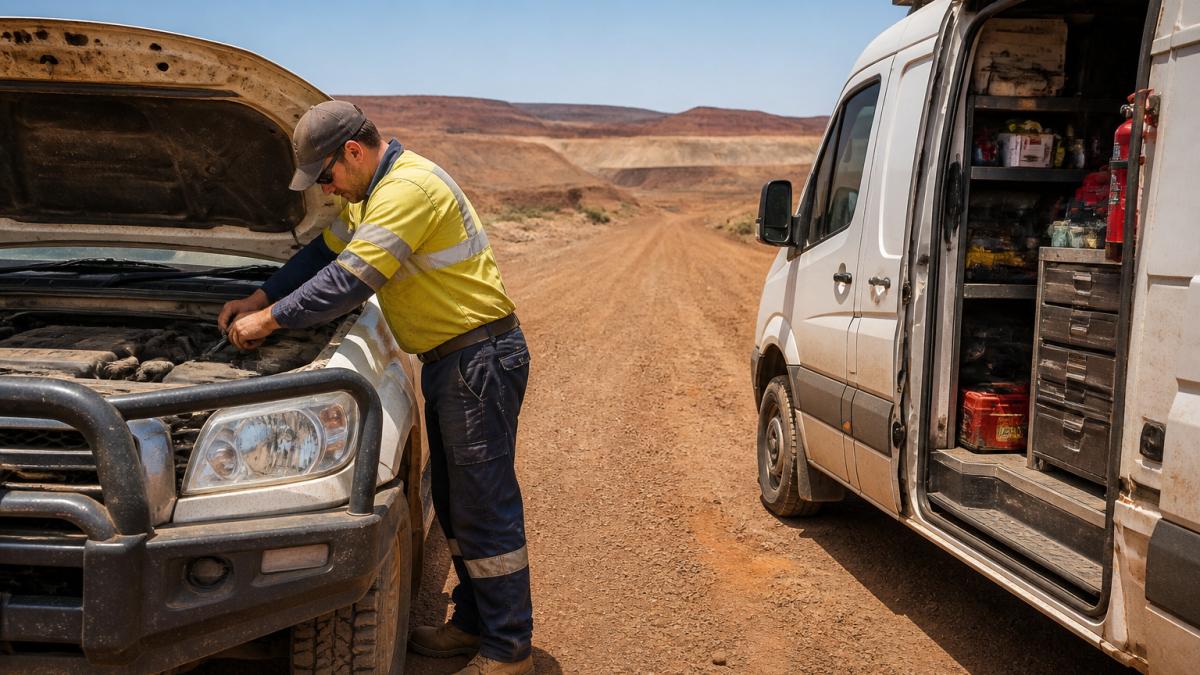
Agree the service arrangements and site requirements with the provider before work begins.
Ask the provider which work they can complete on site.
Comparing Provider Quotes Side by Side
You can compare quotes by recording the same categories for each provider. Build a simple comparison sheet before you make a decision.
Step 1: Normalise the scope. Rewrite each quote against the scope you asked for. If you asked for three vehicles at a 250-hour interval and one provider quoted a 500-hour interval, the numbers are not comparable. Note any assumptions the provider has made about fleet size, site access, or vehicle condition.
Step 2: Score the price components. Use the five-component breakdown from the previous section, labour, parts, consumables, travel and mobilisation, and compliance, and fill in each quote against it. Where a provider has not disclosed a component, mark it as "not stated" rather than zero. A missing line is a risk, not a saving.
Step 3: Score the non-price factors. Price is only part of the decision. Response time for breakdowns, warranty terms, reporting format, and the provider's site induction and compliance readiness all affect the true cost of the contract. Consider response time alongside price.
| Comparison category | What to record | Red flag |
|---|---|---|
| Scope | Vehicles, interval, tasks included | Scope differs from what you asked for |
| Labour | Rate, minimum call-out, after-hours rate | Rate not stated, or "POA" |
| Parts | Margin, warranty, who honours it | Margin undisclosed |
| Consumables | Allowance per service | Not mentioned |
| Travel and mobilisation | Per visit or per site, distance bands | "Included" with no detail |
| Response time | Committed hours for breakdown call-out | Verbal only, not in writing |
| Reporting | Format, turnaround, site requirements | No sample provided |
| Exclusions | Variation rules, what is not covered | Long or vague exclusion list |
Step 4: Test with a like-for-like request. Ask two providers to quote the same three vehicles with the same service interval and the same site access conditions. This can help you compare the quotes on the same basis.
Step 5: Check the qualifications behind the quote. A quote is only as good as the team delivering it. Ask for trade qualifications, site experience, and evidence of compliance with site induction and safety requirements. If you are unsure what to look for, How to Verify Mine Site Technician Certifications sets out the checks worth making before you sign.
Compare the itemised costs before deciding which quote is cheaper.
Requesting Your Quote from T U Mechanical Contracting
If you are ready to request a quote, T U Mechanical Contracting provides mobile mechanical, air conditioning, and fire suppression services for light vehicle fleets across the Goldfields. Its fully equipped mobile workshop provides on-site service. You can review the specialised light vehicle mining services on offer before you get in touch.
To request a quote, get in touch with your fleet list, service history, site locations, and preferred service windows. Having the information from the earlier steps ready can help you discuss the work with the team. If you are still weighing up providers, you may also find it useful to read How to Choose a Mine Vehicle Maintenance Provider and How to Verify Mine Site Technician Certifications before you decide.
Frequently Asked Questions
What information do I need to get a mining light vehicle maintenance quote?
Have the vehicle make, model, year and odometer reading for each light vehicle ready, along with the service history and any known faults. Include the mine site or sites where vehicles operate, the number of vehicles in the fleet, and whether you need scheduled servicing, breakdown response, air conditioning work or fire suppression checks. You can include your preferred service frequency and site access requirements, such as inductions and roster times, when requesting a quote.
What affects the cost of mining light vehicle maintenance?
Pricing depends on the work requested. Ask for a written quote and review its scope and any itemised charges so you can compare proposals. For current pricing specific to your fleet, contact T U Mechanical Contracting directly.
Can a mobile mechanic service mining light vehicles on site?
Yes. A fully equipped mobile workshop can carry out scheduled servicing, mechanical repairs, air conditioning re-gassing and fire suppression recertification at the vehicle's location, which reduces the time vehicles spend off the roster. Confirm that the technicians hold the site inductions your operation requires and that the workshop can handle the harsh desert conditions your vehicles operate in.
What should a mining vehicle maintenance quote include?
A complete quote should list the scope of work for each vehicle, the service intervals covered, labour rates, parts with their sourcing, mobilisation or travel costs, and any compliance or documentation fees. It should also state response times for breakdown work and what happens if additional faults are found during servicing. A quote that clearly separates planned maintenance from reactive repairs makes budgeting and comparison far easier.