 how-to
On-Site Vehicle Breakdown Response in Kalgoorlie: A Step-by-Step Guide
Last Updated: November 4, 2026
Quick Summary
The first few minutes of vehicle breakdown response decide how safe everyone is and how fast you get moving again. Stop as soon as it is safe, turn on hazard lights, keep occupants inside, and check everyone before anyone exits.
- Stop the vehicle as soon as it is safe, and turn on the hazard lights immediately.
- Check that everyone is uninjured before anyone gets out of the vehicle.
- Never stand between the vehicle and oncoming traffic, even briefly.
- On a mine site, your first call usually goes to the supervisor or operations control room.
- Call 000 for fire, ambulance or police if anyone is in danger or there is a fire.
Table of Contents
- What to Do in the First Five Minutes After a Vehicle Breaks Down
- Using Hazard Lights, Warning Signals and Traffic Controls
- Vehicle Breakdown Call-Out Checklist: What to Tell the Provider
- Mine Site Breakdown Procedure: Who to Call and When
- How a Mobile Mechanic Breakdown Service Responds Around Kalgoorlie
- Preparing Your Light Vehicle Fleet for Remote and Regional Breakdowns
- Booking Your Next On-Site Breakdown Response With T U Mechanical Contracting
- Frequently Asked Questions
If your light vehicle breaks down on a Goldfields mine site or a remote road near Kalgoorlie, the first few minutes of vehicle breakdown response decide how safe everyone is and how fast you get moving again. Knowing the right order of steps is the difference between a controlled stop and a secondary incident. This guide walks you through what to do, from the first five minutes through to booking on-site breakdown support.
What to Do in the First Five Minutes After a Vehicle Breaks Down
Stop the vehicle as soon as it is safe to do so, and keep every occupant inside until the scene is secure. Turn on the hazard lights immediately, then assess the situation calmly before you do anything else.
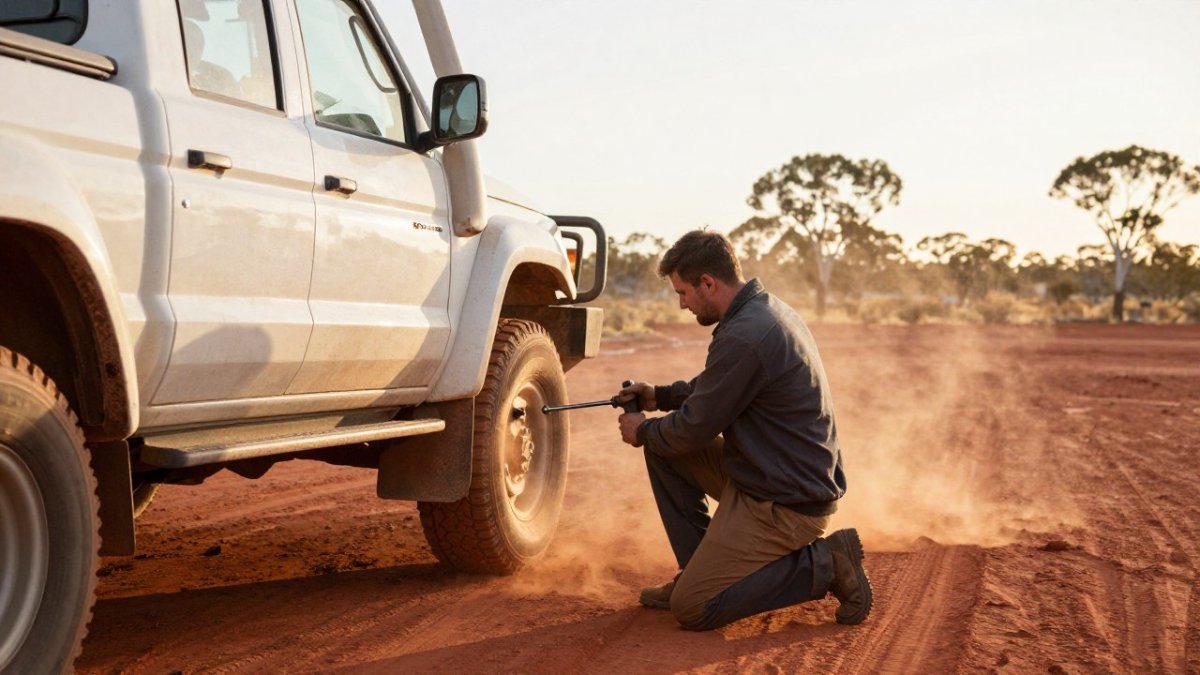
A vehicle breakdown on a regional road can turn dangerous quickly. Dust, heat and low visibility all increase the risk of a rear-end collision, particularly where traffic moves at high speed.
Driver and Passenger Safety First
Before anyone gets out, check the people in the vehicle. Confirm that everyone is uninjured and that children, older passengers and anyone with a medical condition are kept in a safe position.
Watch out: never stand between the vehicle and oncoming traffic, even briefly to look at a tyre or the engine bay.
Moving the Vehicle to a Safe Location
If you can move the vehicle without making the fault worse, take it to the far left of the road shoulder or the nearest safe pull-off.
Once the vehicle is in position, set the handbrake, switch off the engine and keep your seatbelt on until you have checked for hazards around you.
The first five minutes after a breakdown follow a clear order, from safety checks through to moving the vehicle.
| Step | What to do | Timing |
|---|---|---|
| Stop safely | Stop as soon as it is safe to do so | Immediately |
| Hazard lights | Turn on hazard lights straight away | Immediately |
| Check occupants | Confirm everyone is uninjured and kept in a safe position | Before anyone exits |
| Avoid traffic | Never stand between the vehicle and oncoming traffic | At all times |
| Move vehicle | Take it to the far left shoulder or nearest safe pull-off | If it can be moved safely |
| Secure vehicle | Set handbrake, switch off engine, keep seatbelt on | Once in position |
Using Hazard Lights, Warning Signals and Traffic Controls
Hazard lights are your first and simplest warning to other drivers.
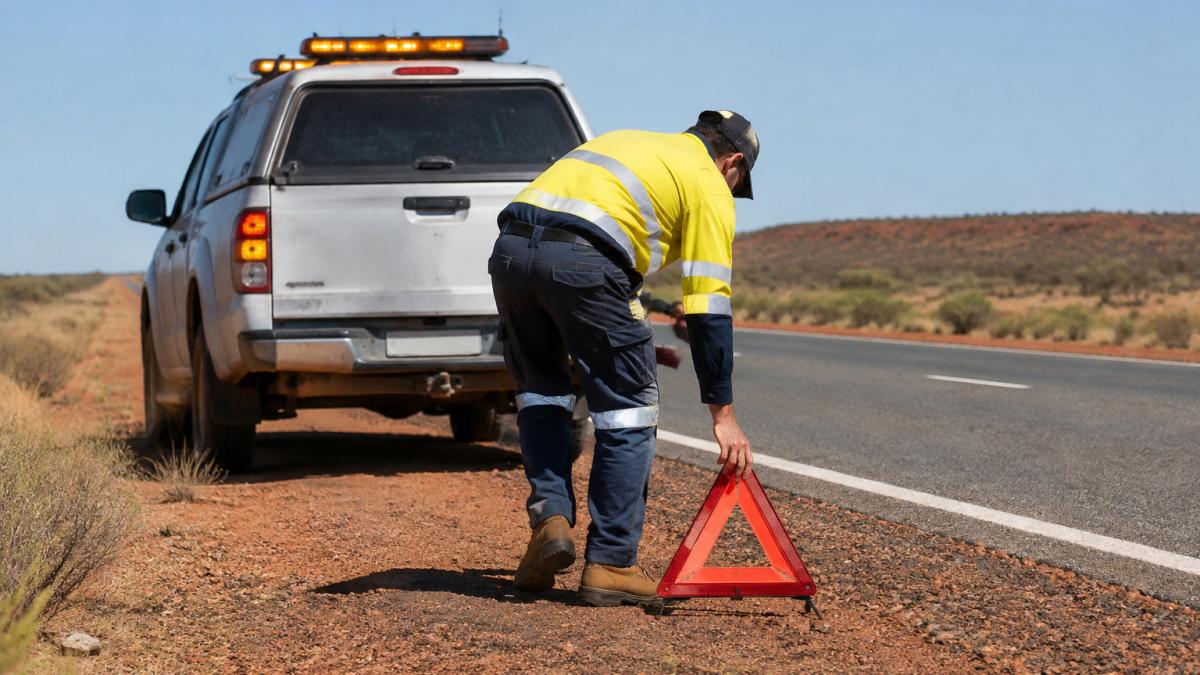
Where you have warning triangles or flares, place them well behind the vehicle so approaching drivers have time to slow down.
On a mine site, follow the site traffic controls and any direction from supervisors or spotters. Do not attempt to direct traffic yourself unless you have been trained to do so.
Vehicle Breakdown Call-Out Checklist: What to Tell the Provider
When you call for help, a clear and complete report gets the right technician to you faster. Have this information ready before you phone:
- Your exact location, including the mine site, road name, nearest landmark or GPS coordinates
- Vehicle make, model, registration and approximate age
- What happened: warning lights, noises, smoke, leaks, or a flat battery or tyre
- Whether the vehicle can still be moved, and whether it is blocking a lane
- Number of people on board and whether anyone is injured
- Any fire suppression or air conditioning issues you have noticed
- Your contact name and the best number to reach you on
Describing the symptoms accurately matters more than guessing the cause, because a precise vehicle breakdown response starts with the right information. A technician who knows the exact fault can bring the right tools and parts on the first visit.
Mine Site Breakdown Procedure: Who to Call and When
On an active mine site, your first call usually goes to your site supervisor or the operations control room, not directly to an external provider. They can close off the area, arrange traffic control and confirm access for a response vehicle. But the right call depends on what kind of breakdown you are dealing with, so use the following decision path rather than a single default.
Step 1: Is anyone in danger?
If there is a fire, smoke from the battery or engine bay, a fuel or hydraulic leak, an injury, or the vehicle is stopped in a live traffic lane or on a blind crest, treat it as an emergency.
Watch out: a lithium battery fire or a pressurised fuel leak can escalate within seconds, so do not open the bonnet or bonnet latches if you can see or smell burning.
Step 2: Can the vehicle be repaired on the spot?
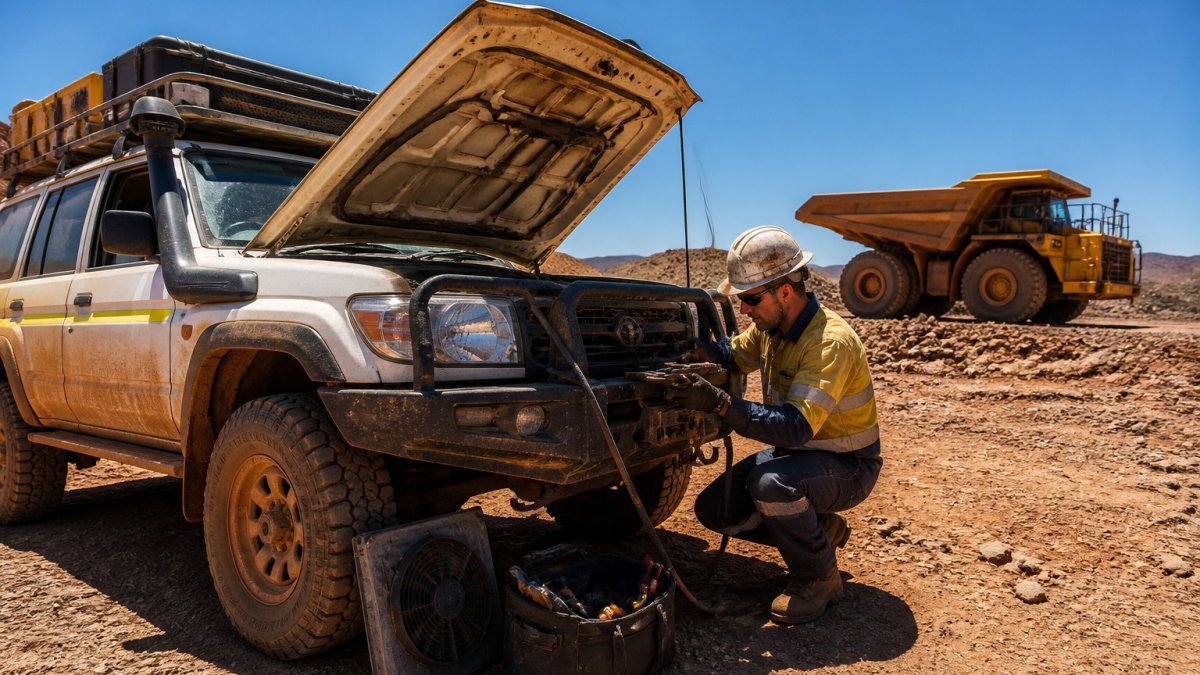
If the fault is a flat tyre, a flat battery, a blown fuse, a loose hose clamp or a similar minor issue, and you have the tools and training, a roadside repair may be appropriate. On a mine site, confirm with your supervisor that the area is safe and that you are authorised to work on the vehicle. If the repair needs parts, a diagnostic scan tool or a specialist, move to Step 3.
Step 3: Does it need a tow or a mobile mechanic?
A vehicle that will not start, has lost drive, is overheating, or has a fault you cannot identify should not be driven. A mobile mechanic can attend on site and either repair the vehicle in place or confirm that recovery is needed. If the vehicle is blocking a haul road, access ramp or intersection, request towing or recovery through your site's control room so traffic management is arranged first.
Step 4: Is it a public-road breakdown?
For a breakdown on a public road outside the site, call 000 if anyone is injured, if there is a fire, or if the vehicle is a serious hazard to traffic.
A common pattern on Goldfields operations is to have one number for the control room, one for the site supervisor and one for the preferred external provider, all recorded on a single card in the glovebox.
How a Mobile Mechanic Breakdown Service Responds Around Kalgoorlie
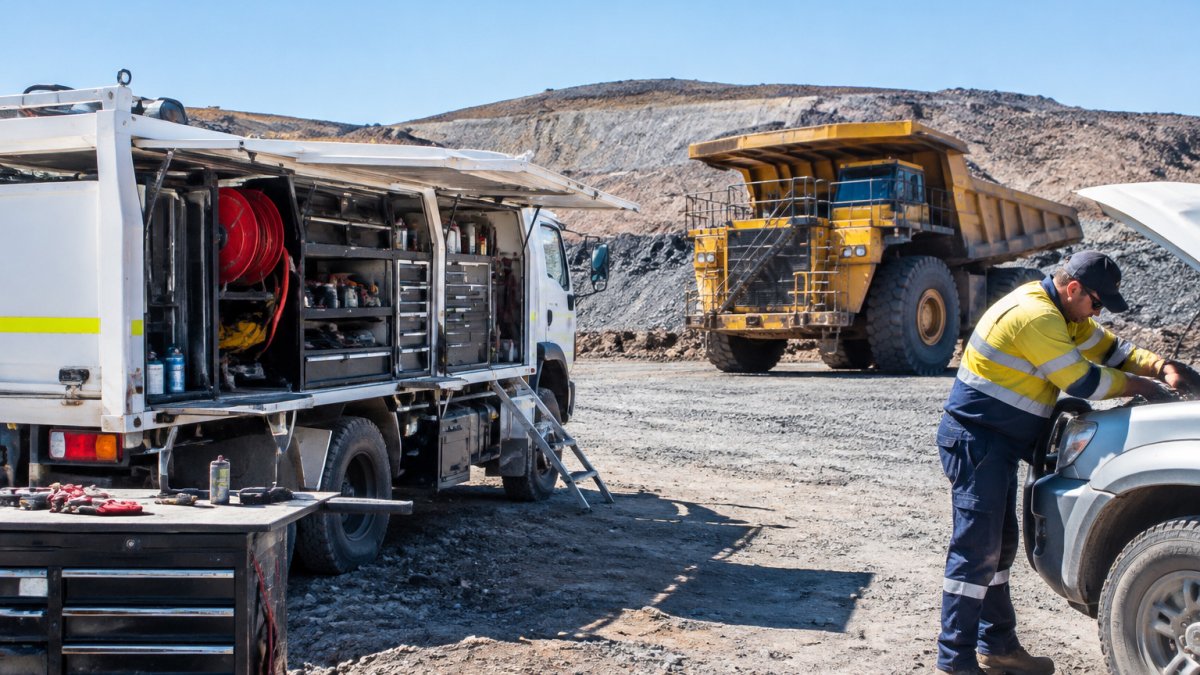
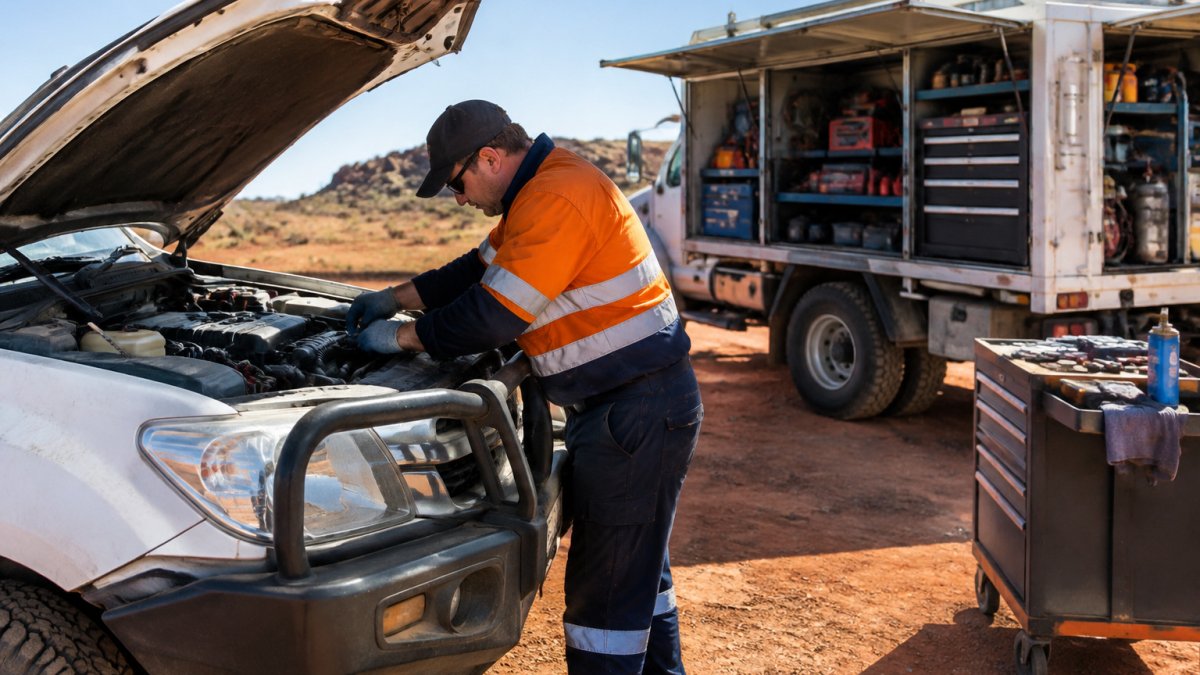
A mobile mechanic brings the workshop to the vehicle rather than towing it to a fixed site.
Response times depend on where the vehicle is, the technician's current job schedule and road conditions.
Pricing depends on the job, the distance travelled and the parts needed. Ask for a written quote before work begins, and contact T U Mechanical Contracting directly for current rates.
Preparing Your Light Vehicle Fleet for Remote and Regional Breakdowns
Preparation reduces how often you need an emergency call, and on remote Goldfields roads it also determines how comfortably and safely a crew can wait for help. Start with a basic kit in every light vehicle: a first aid kit, at least five litres of drinking water per person, a torch, warning triangles, a tow strap, a tyre repair kit and a fully charged jump starter. Then layer on the remote-area items that a town-based checklist usually leaves out.
Communications when mobile reception drops out
Mobile coverage on many regional and remote roads is patchy or absent, and a breakdown in a no-signal area changes the response plan.
Watch out: do not rely on a single phone on a single network. Carry a second phone on a different network, or a power bank, because a flat battery on the only phone turns a manageable breakdown into a much longer wait.
Heat, water and shade
In the hotter months, a vehicle stopped in full sun can become dangerously hot within minutes. Carry shade, a tarpaulin and poles, or a vehicle-mounted awning, and park so the vehicle shades the occupants where that is safe to do. Keep water in the cabin rather than only in the tray, and set a rule that nobody walks away from the vehicle to look for help unless the group has agreed a plan and someone remains with the vehicle.
Fuel planning and range
Remote fuel stops can be far apart, and a vehicle that runs dry is one of the most avoidable breakdowns. Plan fuel so that you arrive at the next known supply with a reserve rather than on the gauge's last quarter. For light vehicle fleets, record the realistic range of each vehicle when loaded, because a loaded ute with a trailer will not match the handbook figure.
Spare tyres and daily checks
Carry a full-size spare where the vehicle allows it, plus a jack, wheel brace and a tyre pressure gauge. Check pressures and tread before each remote trip, and schedule regular checks on batteries, coolant levels and air conditioning, particularly before the hot months. Heat and dust accelerate wear, so a short pre-start inspection each day can catch problems early.
A fleet logbook that helps a responder
Keep a fleet logbook that records each vehicle's service history, recent faults and the contact details for your nearest response provider. Include the vehicle's registration, any site access requirements and the name of the person who can authorise a call-out. This gives any technician faster access to the information they need and shortens the time between your call and a technician arriving on site.
For fleet managers planning remote work, see our mine site compliance fit-outs and mobile support.
Booking Your Next On-Site Breakdown Response With T U Mechanical Contracting
T U Mechanical Contracting provides mobile mechanical, air conditioning and fire suppression support for light vehicle fleets, with a fully equipped mobile workshop that comes to your site. T U Mechanical Contracting holds an ARC certified trader licence (AU069672).
Review our specialised light vehicle mining services to see what we can cover on your fleet, then get in touch with the team to request an on-site response. Share the call-out details from the checklist above to start the conversation.
Frequently Asked Questions
What should a driver do when a vehicle breaks down on a mine site?
Stop in the safest available position, switch on hazard lights, and get everyone out of the vehicle onto the side away from traffic once it is safe to do so. Stay clear of the roadway and wait behind a barrier or the vehicle's far side. Notify your site supervisor or control room by radio or phone with your location and the nature of the fault. Do not attempt roadside repairs on live traffic routes unless you have been trained and it is safe to do so. Follow site-specific breakdown procedures, which take precedence over general advice.
What information should be included in a vehicle breakdown call-out?
Give the vehicle's registration and make or model, the exact location including the mine site, road name or pit reference, and the nearest landmark, and a description of the fault such as a flat battery, tyre damage, overheating or air conditioning failure. Note whether the vehicle is drivable, whether it is blocking traffic, and whether anyone is injured. Also provide a contact name and mobile number on site. Having this ready shortens the time the technician needs to plan the job and bring the right parts.
Can a mobile mechanic repair a light vehicle on site?
A fully equipped mobile workshop can carry out light vehicle mechanical work on site, depending on the parts on hand. Ask the provider what can be completed at the scene before you call, and confirm pricing with them directly, as costs depend on the job and are not quoted here.
When should a broken-down vehicle be recovered rather than repaired on site?
Recovery is usually the better option when the fault needs specialised tools or parts that are not on the mobile unit, when the vehicle cannot be made safe to move, or when repair time would leave it blocking a traffic route. Towing a vehicle off the road can also reduce the risk of secondary incidents. A technician can assess the vehicle on arrival and advise whether it should be repaired in place or recovered to a workshop.