 blog
Mobile Workshop vs Fixed Site Maintenance
Table of Contents
- Mobile Workshop vs Fixed Site Maintenance: What's the Real Difference
- Mobile Mechanic for Mining Fleets: Speed and Responsiveness
- Fixed-Site Fleet Maintenance: Depth and Complexity
- Fleet Maintenance Cost Comparison: Total Cost of Ownership
- Scheduled Preventive Maintenance for Mining Vehicles
- Decision Framework: Which Option Suits Your Fleet
- Frequently Asked Questions
Last Updated: October 21, 2026
Mobile Workshop vs Fixed Site Maintenance: What's the Real Difference
When your fleet breaks down in the Goldfields, every hour of downtime costs money. The question isn't whether you need maintenance, but where it happens and what that costs.
A mobile workshop vs fixed site maintenance isn't about convenience alone. It's about which approach minimises downtime, delivers quality work, and fits your operation. At T U Mechanical Contracting, we've spent over a decade in the mining industry. The answer depends on repair complexity, fleet spread, and how quickly you need vehicles back in service.
On-site service and convenience
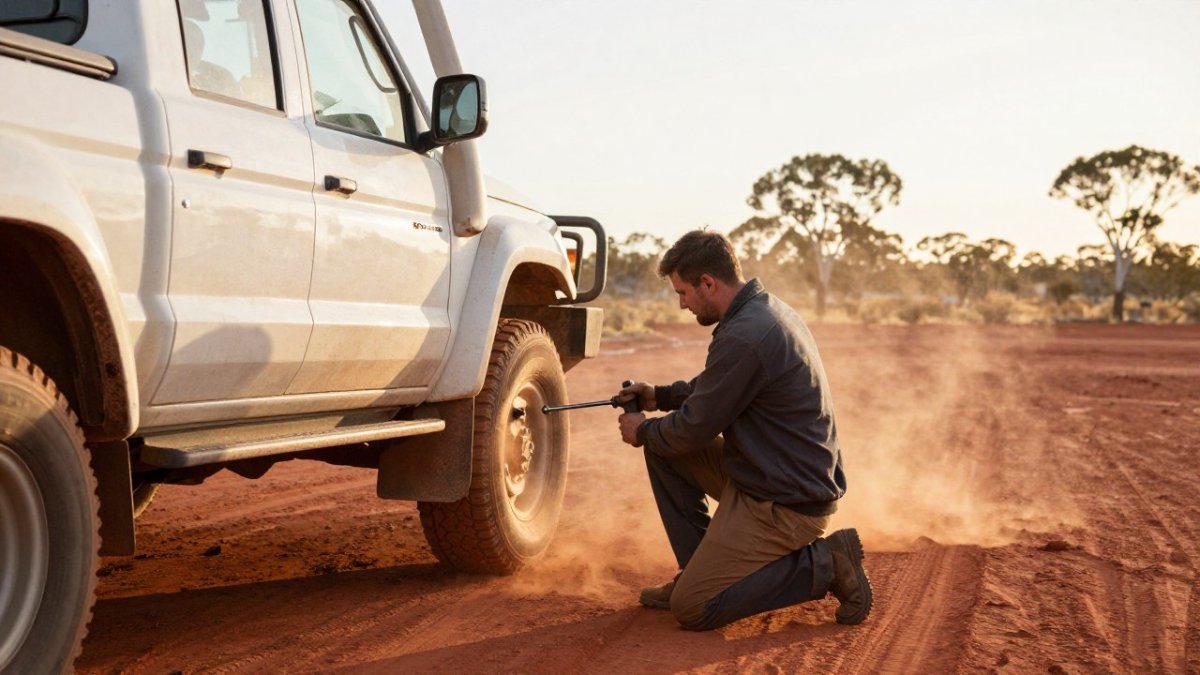
The obvious advantage of a mobile workshop is that your technician comes to you: no towing, no waiting for an appointment slot, no lost productivity in a workshop queue. For light vehicle maintenance on remote mine sites, this matters.
But convenience isn't the full story. For routine servicing, air conditioning re-gassing, and fire suppression compliance checks, mobile service delivers.
The real difference emerges in total downtime. A mobile technician arriving within hours beats a workshop appointment days away. But if the job exceeds what can be done on-site, you're towing anyway, and you've lost time.
Repair capability and limitations
Not every repair suits a mobile workshop. Here's what matters: what can realistically be completed in the field, and what demands a workshop environment.
Mobile workshops handle routine work effectively: mechanical servicing, filter changes, fluid top-ups, air conditioning maintenance, and safety compliance checks.
Where mobile service hits its limit is complexity.
The practical lesson: use mobile service for what it's designed for. Use fixed-site workshops for what requires them. Mixing the two poorly costs more than committing to the right option upfront.
Mobile Mechanic for Mining Fleets: Speed and Responsiveness
Speed is the competitive advantage of mobile service. When a vehicle breaks down at a remote site, every hour of unavailability affects crew safety and operational output.
Response time and breakdown management
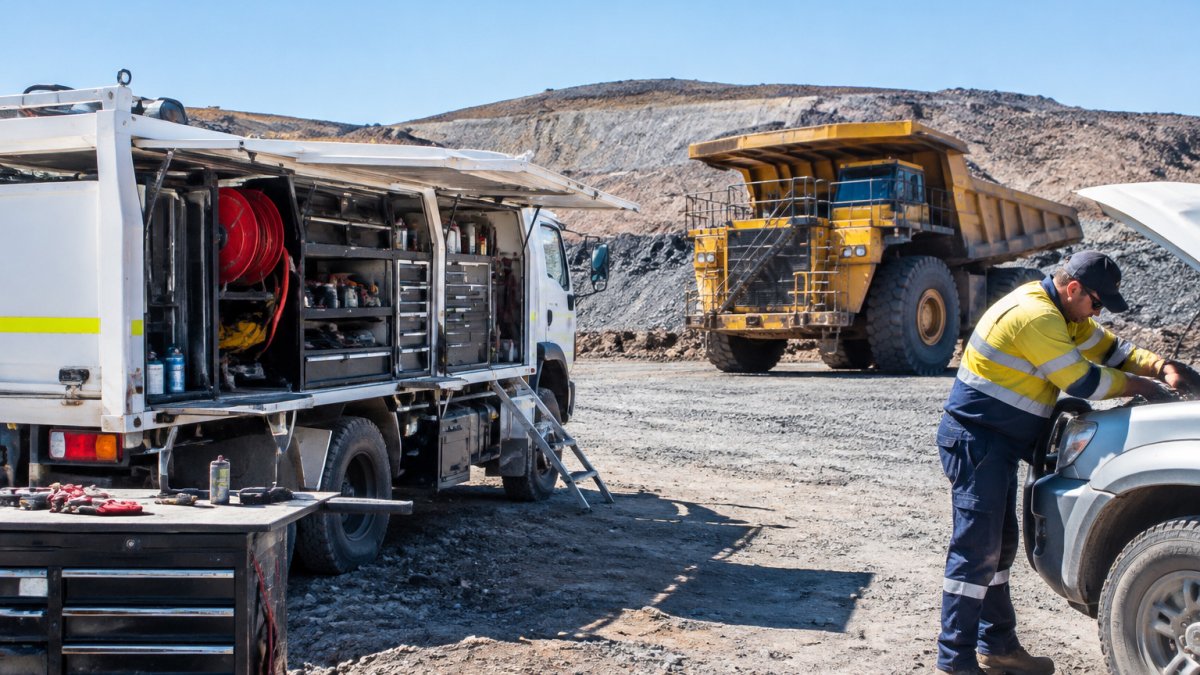
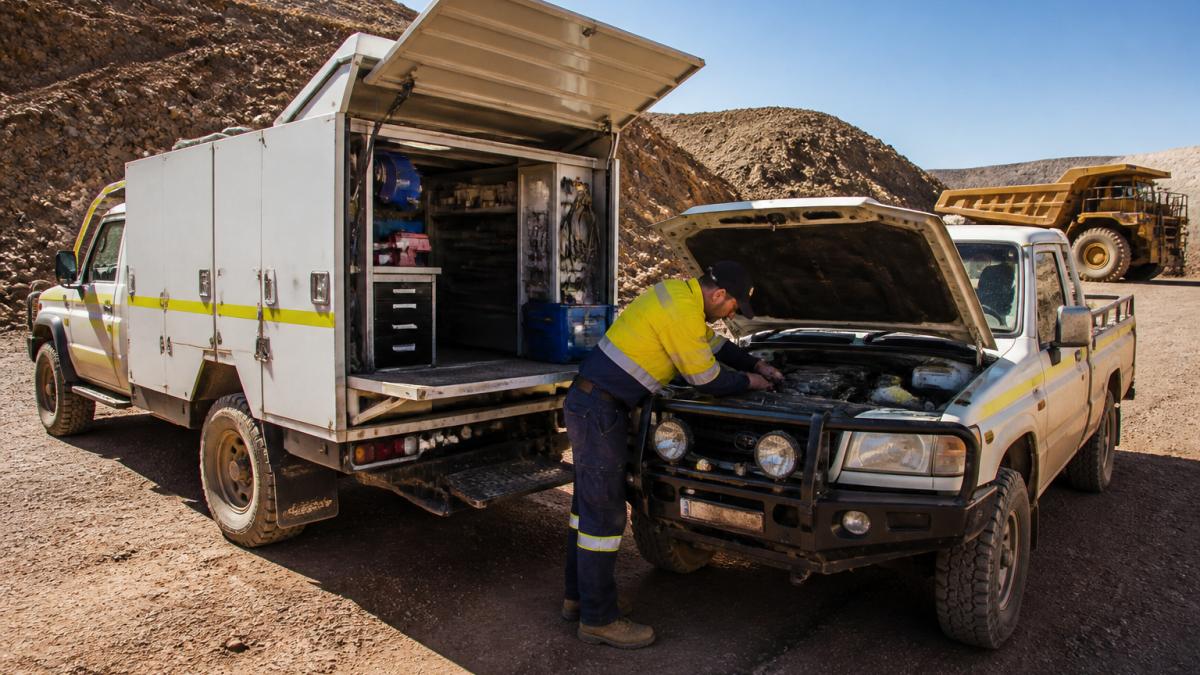
A mobile mechanic for mining fleets solves the response-time problem. Traditional workshops run fixed hours and manage queues; a mobile technician can respond to your site within hours, not days. Where vehicle availability directly impacts safety and production, this matters.
Response time depends on location and workload, a technician already in the region reaches you faster than one starting from town. This is where fleet spread becomes critical: if your vehicles operate across three mine sites, you need a provider who can service all of them without excessive travel. T U Mechanical Contracting's mobile workshop covers the Goldfields region, and we understand the distances and constraints.
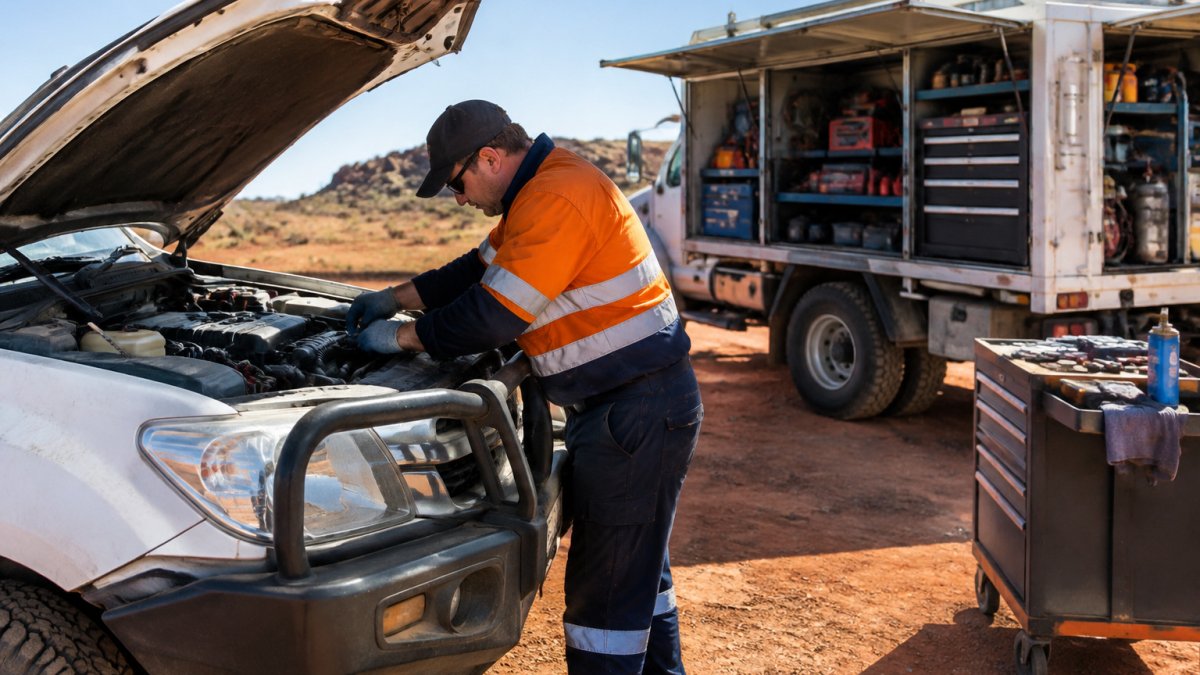
Breakdown management also means having the right equipment on the first visit. A fully equipped mobile workshop carries common parts and diagnostic tools to complete most jobs without a second trip.
Equipment and diagnostic capabilities on site
The capabilities of a mobile workshop depend entirely on what's carried.
Diagnostic capability is critical. A technician who can plug in diagnostic equipment, read fault codes, and identify the actual problem on-site saves time and prevents misdiagnosis. Without proper diagnostics, you're guessing, and guessing means unnecessary parts replacement or repeat visits.
Equipment limitations exist, and they're honest ones. A mobile workshop cannot perform major welding, safely lift a vehicle for extended undercarriage work, or hold a vehicle for multi-day jobs. Knowing these boundaries upfront prevents frustration and wasted time.
Fixed-Site Fleet Maintenance: Depth and Complexity
A fixed-site workshop is built for jobs that demand time, space, and controlled conditions. For heavy work, this is where quality and thoroughness live.
Workshop environment and controlled conditions
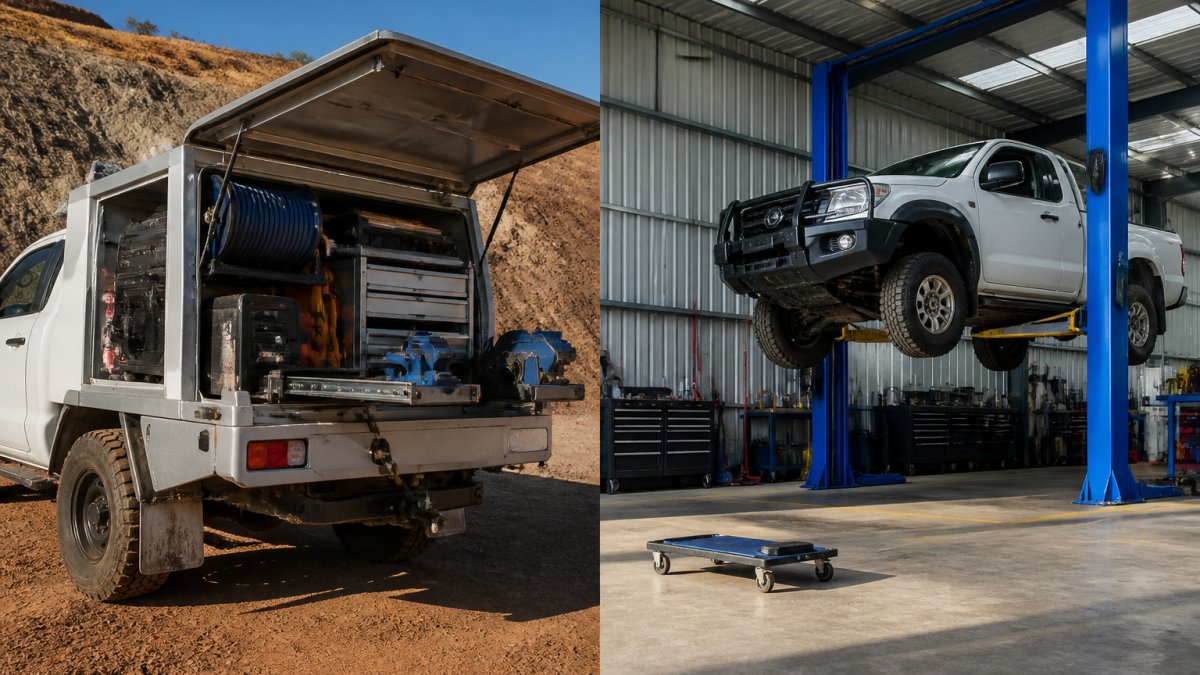
A workshop offers what a mobile service cannot: dedicated space, environmental control, and the ability to work safely on complex jobs, with hydraulic lifts, compressed air, diagnostic bays, and parts storage.
Environmental control matters more than it appears. Working in 50-degree heat and dust storms can impact workmanship; a climate-controlled, well-lit workshop protected from dust and weather supports precision work. For critical safety systems like fire suppression equipment or complex mechanical repairs, this environment can protect quality.
A workshop also manages multiple vehicles simultaneously. Your fleet can be serviced in parallel, not sequentially. For large fleets requiring scheduled maintenance, this throughput can reduce total downtime across the fleet.
When repairs demand a workshop setting
Certain repairs simply require a workshop: engine work, transmission service, major electrical diagnostics, structural repairs, and work requiring specialised equipment.
Safety compliance work also benefits from a workshop. While basic fire suppression checks can be mobile, major refurbishment or complex safety system work belongs in a controlled environment where precision and documentation are guaranteed.
The fixed-site decision makes sense when repair complexity outweighs convenience. A vehicle requiring a week of work is better served by a workshop than by tying up a mobile technician for that duration.
Fleet Maintenance Cost Comparison: Total Cost of Ownership
Cost comparison between mobile and fixed-site maintenance isn't straightforward. You're not just comparing labour rates, but downtime, availability, and the total impact on your fleet's operational cost.
Downtime and vehicle availability calculations
This is where the real cost lives. A vehicle sitting idle costs far more than the maintenance itself, a day down means a day's lost productivity, crew capacity, or equipment access. For mining operations, downtime translates directly to operational impact.
Mobile service typically reduces downtime because response is faster and jobs are completed on-site. A two-hour on-site service beats a two-day workshop visit once you factor in towing, waiting, and queue time.
However, if the job exceeds mobile capabilities, you're towing anyway, and total downtime becomes longer than if you'd gone to a workshop from the start. Routine maintenance? Mobile service wins on downtime. Major repair?
Overhead, labour, and parts availability
Mobile service carries different overhead: lower facility costs but higher travel and fuel costs. A fixed-site workshop has higher facility costs but spreads them across more jobs and vehicles.
Labour rates vary. Mobile service carries different overhead; a workshop can offer different per-hour rates as multiple technicians and jobs share the facility cost.
Parts availability matters significantly. A workshop typically stocks common parts, reducing wait times; a mobile technician carries essentials but may need to source others, creating delays.
Scheduled Preventive Maintenance for Mining Vehicles
Preventive maintenance is where the decision between mobile and fixed-site becomes strategic. Planned servicing is different from reactive breakdown response.
Planned servicing versus reactive breakdown response
Scheduled preventive maintenance for mining vehicles keeps vehicles reliable and reduces emergency breakdowns. The question is whether that maintenance happens on-site or at a workshop.
Mobile service excels at scheduled maintenance. A technician can visit your site on a planned schedule, service multiple vehicles in sequence, and complete routine work without disrupting operations.
Reactive breakdown response, fixing things when they fail, is expensive and risky. A vehicle breaking down in the field creates safety risks, operational delays, and emergency costs. Preventive maintenance prevents those scenarios.
The mining industry demands documented compliance. T U Mechanical Contracting's systems ensure every service, mechanical, air conditioning, fire suppression, is properly recorded and compliant with mine site protocols.
Compliance documentation and service records
Mining operations require rigorous documentation. Fire suppression systems must be certified annually. Mechanical work must be logged. Air conditioning service must be recorded. Vehicle safety compliance must be verifiable.
A mobile technician who understands these requirements and maintains proper records eliminates compliance headaches. Some providers treat documentation as an afterthought. The right provider integrates documentation into every service, ensuring your fleet is always audit-ready.
According to Work Health and Safety Act 2020 (WA), employers must ensure plant and equipment (including vehicles) are maintained in a safe condition. That means documented maintenance, certified safety systems, and verifiable compliance. A service provider who delivers that documentation as standard, not as an add-on, protects your operation.
| Maintenance Type | Best Suited For | Key Advantage |
|---|---|---|
| Routine servicing | Mobile workshop | Speed, minimal downtime |
| Air conditioning re-gas | Mobile workshop | On-site completion, no towing |
| Fire suppression checks | Mobile workshop | Compliance on-site, documented |
| Engine/transmission work | Fixed-site workshop | Proper diagnostics, controlled environment |
| Major electrical diagnostics | Fixed-site workshop | Specialist equipment, precision |
| Fleet scheduled maintenance | Mobile workshop | Planned visits, multiple vehicles |
| Emergency breakdowns | Mobile workshop | Rapid response, reduced downtime |
| Complex multi-system repairs | Fixed-site workshop | Proper facilities, extended work |
Decision Framework: Which Option Suits Your Fleet
The choice between mobile workshop vs fixed site maintenance isn't universal. It depends on your specific operation.
Fleet size, spread, and vehicle types
A small fleet operating from a single site might find a fixed-site workshop suitable. A large fleet spread across multiple remote locations can often benefit from mobile service. The more dispersed your vehicles, the more mobile service saves on towing and travel time.
Vehicle type matters too. Light vehicles, utes, vans, small trucks, suit mobile service well. Heavy equipment or specialised vehicles may require fixed-site workshops. Your fleet's composition determines what's practical.
Fleet size also affects economics. A 5-vehicle fleet might use mobile service for routine maintenance and occasional fixed-site workshops for major work.
Repair complexity and site constraints
Not all repairs are equal. Routine maintenance, air conditioning work, and fire suppression compliance checks are mobile-friendly. Engine rebuilds, transmission work, and complex diagnostics demand workshop conditions.
Site constraints matter too. Some mine sites have limited space for a technician to work. Others have restricted access or security protocols that affect scheduling. A provider who understands those constraints and can work within them is invaluable.
Environmental conditions also factor in. Desert heat, dust storms, and remote locations create challenges. A provider with experience in those conditions, like T U Mechanical Contracting, understands how to maintain quality work despite the environment.
Safety, compliance, and environmental factors
Mining operations operate under strict safety and compliance requirements. Every maintenance action must support those standards, not compromise them.
Fire suppression systems on light vehicles must be certified. Mechanical work must meet safety standards. Air conditioning systems must be properly maintained. Environmental compliance, proper disposal of fluids, safe handling of hazardous materials, must be guaranteed.
A provider who integrates safety and compliance into every job, not as an afterthought, is essential. T U Mechanical Contracting's approach to mine site compliance isn't negotiable, every service meets site protocols, every technician is inducted, and every job is documented for compliance verification.
The decision framework ultimately asks: what minimises downtime, maintains quality, ensures compliance, and fits your budget?
The choice between mobile workshop and fixed-site maintenance isn't either-or. It's about matching the right service to the right job, minimising downtime, and maintaining quality and compliance.
Frequently Asked Questions
What tasks can a mobile mechanic complete on a mine site versus what requires a fixed workshop?
A mobile mechanic for mining fleets can handle routine servicing, air conditioning re-gas, fire suppression compliance checks, minor mechanical repairs, and on-site diagnostics. Major engine rebuilds, extensive welding, body work, or jobs requiring extended equipment access typically need a fixed-site workshop. The key is matching job complexity to available space, power, and specialist tools. A qualified mobile provider will assess your vehicle on site and recommend workshop escalation when needed.
How does scheduled preventive maintenance for mining vehicles reduce downtime compared to reactive repairs?
Planned servicing catches wear before failure occurs, eliminating unexpected breakdowns that strand vehicles and halt operations. Fixed schedules allow you to book maintenance during low-activity periods rather than emergency call-outs during peak production. This approach can improve fleet availability, reduce mean time to repair, and potentially lower overall maintenance costs by addressing issues early. Mobile providers can deliver scheduled preventive maintenance directly to your site, combining responsiveness with planned efficiency.
What's the real cost difference between mobile workshop and fixed-site fleet maintenance?
Fleet maintenance cost comparison depends on vehicle downtime, labour rates, travel time, and parts availability. Mobile service eliminates towing costs and reduces vehicle downtime by bringing the technician to you, but fixed-site workshops can have different hourly rates for complex jobs. Total cost of ownership includes downtime expenses: a single light vehicle off the road during peak operations can cost significantly more than service fees. A single mobile provider covering multiple site locations can be a cost-effective option compared to managing separate contractors.
Can a mobile workshop handle fire suppression compliance and air conditioning alongside mechanical work?
Yes. A fully equipped mobile workshop specialising in mining fleets can deliver integrated mechanical, air conditioning, and fire suppression services on site. This eliminates the logistical burden of coordinating multiple contractors across different mine sites. Ensure your provider holds current certification for all three services and can issue compliance documentation immediately. This integrated approach significantly reduces scheduling complexity and vehicle downtime.