 how-to
Why Mobile Mining Mechanical Workshops Cut Light Vehicle Downtime
Quick Summary
Mobile mechanical workshops bring repairs to the vehicle, so light vehicles are serviced where they are parked instead of being towed back to a fixed facility. This removes transport and queue time, which are much of the downtime. Routine servicing, air conditioning and fire suppression work can be handled on site.
- Downtime is split into four stages: booking, transport, queue time and the repair itself.
- Mobile servicing mainly shortens transport and queue time at the workshop.
- Scoping the visit and confirming parts and site access in advance avoids a wasted trip.
- Track mean time to repair, vehicle availability, planned-maintenance compliance and repeat-failure rate to check results.
- One provider covering mechanical, air conditioning and fire suppression work simplifies coordination.
Table of Contents
- What a Mobile Mining Mechanical Workshop Does on Site
- How On-Site Servicing Reduces Light Vehicle Downtime
- Managing Mining Fleet Maintenance Without Multiple Contractors
- Light Vehicle Fire Suppression Servicing Where Your Fleet Operates
- Mobile Air Conditioning Repairs in Desert Heat
- Choosing a Mobile Workshop Provider: What to Check Before Booking
- Booking Mobile Servicing for Your Next Site Visit
- Frequently Asked Questions
What a Mobile Mining Mechanical Workshop Does on Site
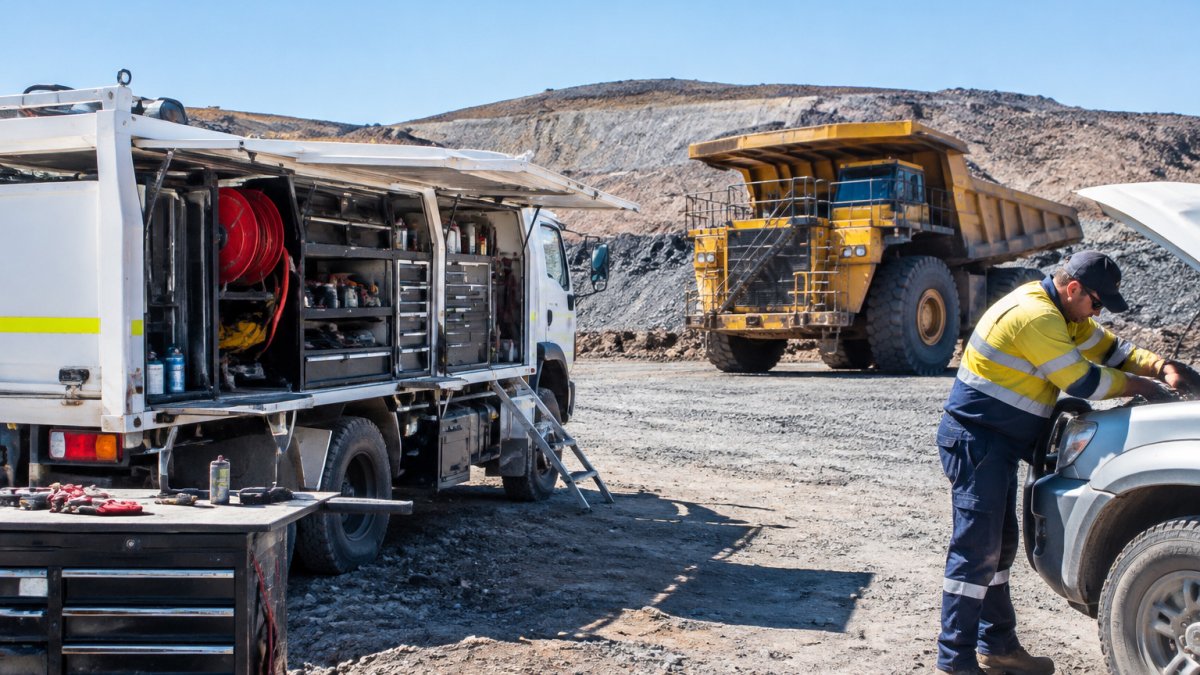
Light vehicle downtime costs mine sites time, money and, sometimes, safety. A mobile mining mechanical workshop brings the repair bay to the vehicle, so a ute or light fleet unit can be serviced where it is parked rather than towed back to a fixed facility. T U Mechanical Contracting services light vehicle fleets across Kambalda, Kalgoorlie and the wider Goldfields region of Western Australia.
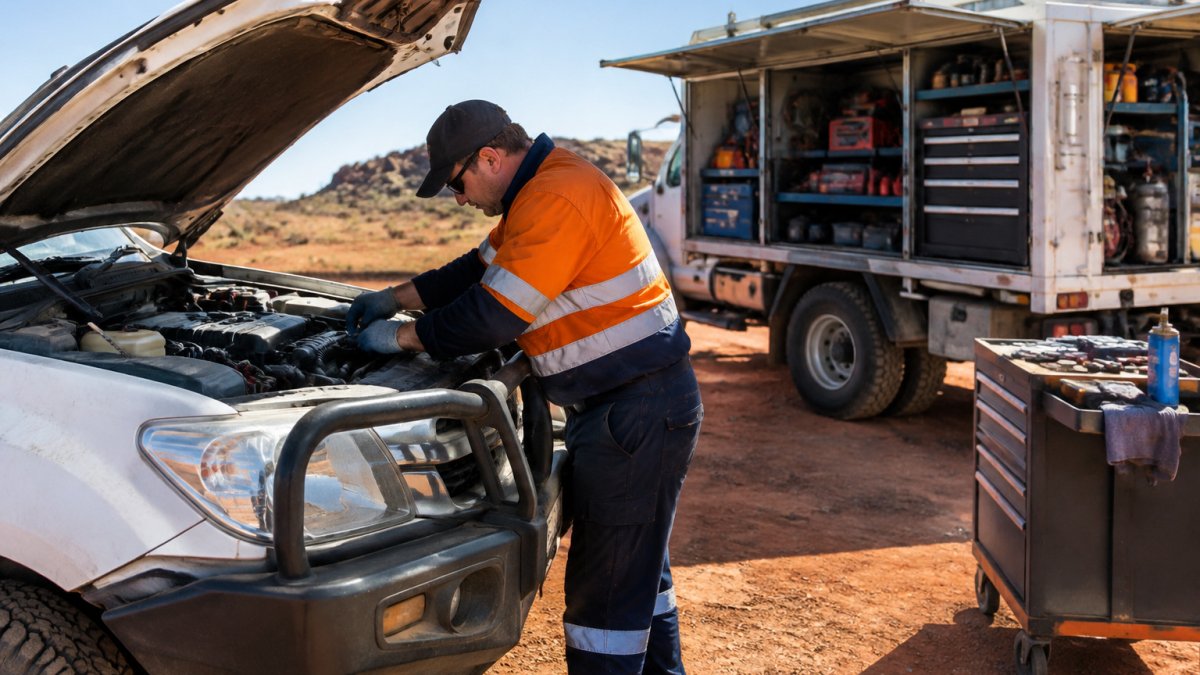
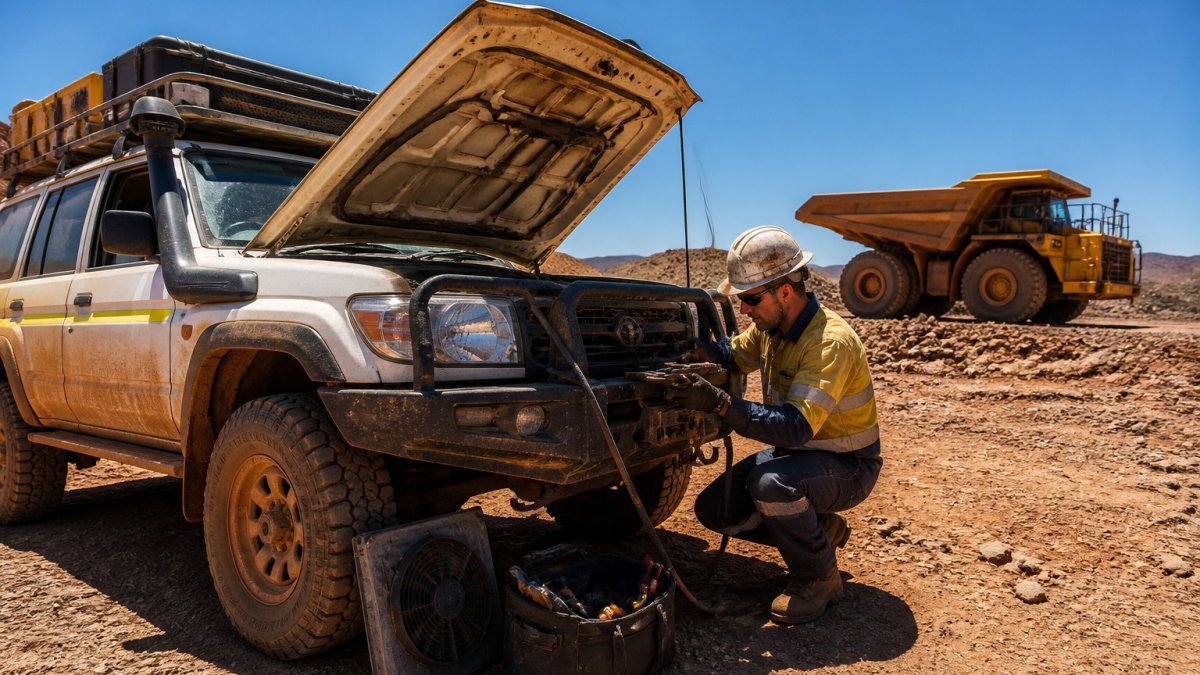
In practice, a mobile workshop can handle routine mechanical servicing, automotive air conditioning repairs and fire suppression work on light vehicles. Fewer trips off site and fewer hours waiting for a vehicle to come back into the shop are the main practical gains.
What light vehicle mobile servicing can cover:
- Scheduled light vehicle servicing and mechanical repairs
- Fault finding and diagnostics on site
- Automotive air conditioning servicing and repairs
- Fire suppression inspections and repairs on light vehicles
- Breakdown response for vehicles that cannot be moved safely
How On-Site Servicing Reduces Light Vehicle Downtime
Much light vehicle downtime comes from waiting, not from the repair itself. A vehicle is booked in, driven or towed to a workshop, queued behind other jobs, then returned. Each step adds hours or days. Servicing at the vehicle's location removes most of those steps, but the size of the gain depends on how you measure it and how the visit is planned.
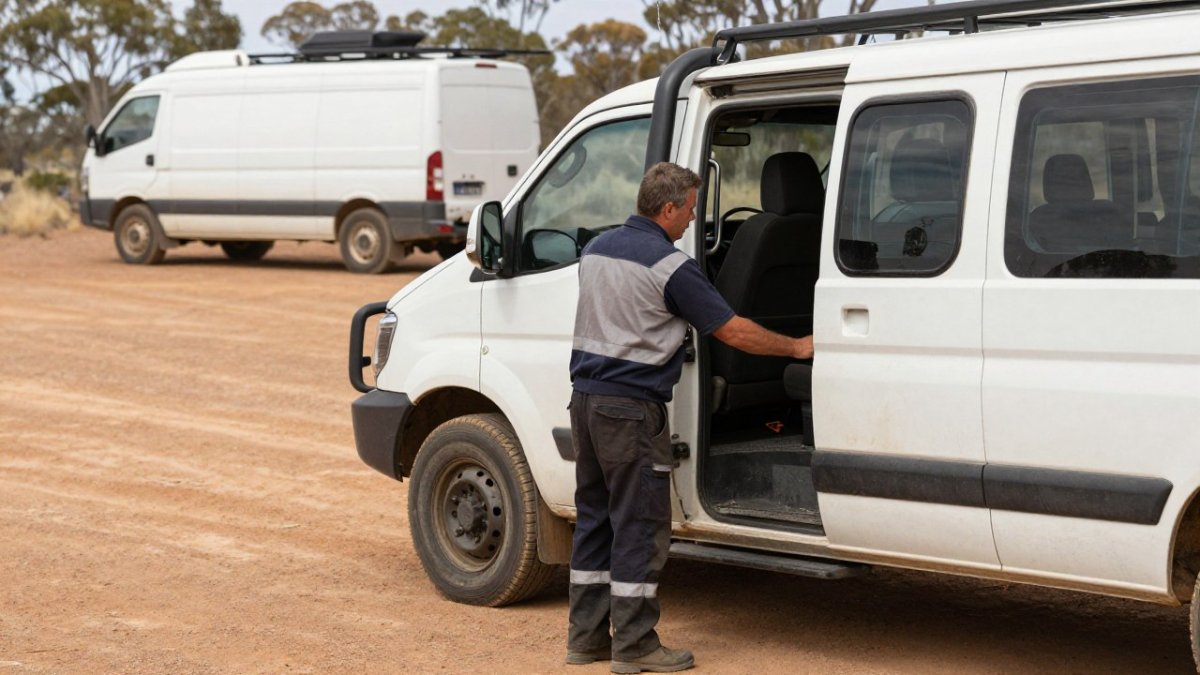
A useful way to think about it is to split downtime into four parts: notification and booking, transport to the workshop, queue time at the workshop, and the repair itself. For a broader practical guide, see reducing mining vehicle downtime. Mobile servicing mainly attacks the middle two. The planning conversation matters as much as the visit itself.
Where the time savings usually come from:
-
No transport to and from the workshop, which removes a round trip and the associated escort or permit requirements
-
Fewer jobs left waiting in a queue behind unrelated work
A common mistake is treating downtime as only the repair time. The full cost includes the vehicle sitting idle while it waits to be moved, diagnosed and returned, plus the labour and production impact of the unit being unavailable. Mobile servicing targets that whole gap, but it only works when the visit is scoped properly.
Planning the visit around the roster
A mobile service visit can be scheduled around shift changes or quiet periods so the vehicle is out of service for the shortest possible window. This matters most during peak season, when every light vehicle on a fleet is needed. The practical steps are straightforward: confirm the vehicle list and fault descriptions before the visit, confirm site access and induction requirements, and agree which jobs are in scope for the day. Jobs that need parts not on the vehicle should be identified in advance so they can be scheduled rather than discovered on the day.
Watch out: a mobile visit that arrives without the right parts or without confirmed site access can cost more time than a workshop booking, because the vehicle is still off the road and the job has to be rescheduled.
Measuring whether it is working
Rather than relying on impressions, track a small set of measures before and after moving to mobile servicing. Four measures are a practical starting point:
- Mean time to repair, measured from the time a fault is reported to the time the vehicle is back in service
- Vehicle availability, expressed as the proportion of the fleet available at the start of each shift
- Planned-maintenance compliance, meaning the proportion of scheduled services completed on time
- Repeat-failure rate, meaning faults that come back within a set period after a repair
These measures show whether the time saved in transport and queueing is actually reaching the fleet, or whether it is being absorbed elsewhere. They also give fleet managers a factual basis for deciding how often to schedule mobile visits and which vehicle types to prioritise.
The article breaks downtime into four stages, and mobile servicing mainly shortens the middle two.
| Downtime stage | What mobile servicing changes | Where the gain comes from |
|---|---|---|
| Transport to workshop | Repair happens at the vehicle | No round trip or escort needed |
| Queue time at workshop | Job starts on site | Fewer jobs waiting behind unrelated work |
| Repair itself | Not the main target | Gains depend on visit planning |
| Notification and booking | Scoped before the visit | Parts and access confirmed in advance |
Managing Mining Fleet Maintenance Without Multiple Contractors
Many mining fleets end up using separate contractors for mechanical work, air conditioning and fire suppression. Each has its own booking process, invoicing and site induction. Coordinating them takes time, and gaps can appear between jobs.
One mobile provider covering mechanical, air conditioning and fire suppression work can simplify that picture. Fleet managers deal with one provider rather than several separate contractors.
This approach works best for light vehicle fleets.
Light Vehicle Fire Suppression Servicing Where Your Fleet Operates
Fire suppression systems on light vehicles need regular inspection and, when faults are found, prompt repair. T U Mechanical Contracting is trained and certified to service Stryker light vehicle fire suppression systems. Servicing, inspections and repairs can be carried out on site.
A vehicle that fails a fire suppression inspection may be unavailable until the fault is cleared. Doing the inspection and repair at the vehicle's location can help keep the fleet moving.
Ways a mobile approach helps with fire suppression:
- Emergency fire suppression repairs attended on site
For fire suppression needs on your fleet, you can book Stryker light vehicle fire suppression servicing with our team.
Mobile Air Conditioning Repairs in Desert Heat
Air conditioning is more than a comfort feature in the Goldfields. A light vehicle without working cooling becomes hard to operate safely during the hottest parts of the year. Operators often notice reduced cooling output or a system that blows warm air.
Mobile air conditioning repairs bring the workshop to the problem, so vehicles can be attended without leaving the site.
If your fleet needs cooling repairs on site, you can see the specialised light vehicle mining services on offer before arranging a visit.
Choosing a Mobile Workshop Provider: What to Check Before Booking
Not every mobile provider suits mining work, and not every fleet suits mobile servicing. Our mobile workshop vs fixed site maintenance comparison sets out the trade-offs side by side. Before booking, it helps to work through two things: whether a mobile workshop fits your operation, and whether the provider can actually deliver on site.
A practical decision framework
The decision usually comes down to a handful of factors. Compare your operation against each one:
- Fleet size and spread: a small number of light vehicles concentrated in one area is usually a strong fit; a large fleet spread across distant pits may need scheduled visits rather than on-call response
- Site layout and access: check whether the technician can reach the vehicles safely, whether permits or escorts are needed, and whether there is a suitable level area to work on
- Repair frequency and type: routine servicing and predictable faults suit mobile visits; complex or repeated faults may still need a fixed facility with specialist equipment
- Distance to fixed facilities: the further the fixed workshop, the more transport time a mobile visit removes
- Operating conditions: heat, dust and remote locations raise the value of on-site service, but also raise the planning burden
If most of those factors point towards mobile servicing, the next step is to test the provider against your site requirements.
Questions to ask before you book:
- Are the technicians trained and certified for the specific systems on your fleet, including light vehicle fire suppression systems?
- Do they follow site induction and safety requirements at your operation?
- How quickly can they respond to a breakdown, and what happens if they are already committed elsewhere?
- Do they cover the light vehicle types you run, and are they clear about what is outside their scope?
Ask for clear answers in writing. A provider that is open about its limits is usually easier to rely on than one that claims to do everything.
Setting up the first visit
Once a provider is selected, a short setup step saves time later. Agree a vehicle list with fault descriptions and confirm access and induction requirements before the first visit.
Booking Mobile Servicing for Your Next Site Visit
Light vehicle downtime is one of the easiest costs to reduce with the right servicing approach. Bringing mechanical, air conditioning and fire suppression work to the vehicle can help keep your fleet on the road.
If your operation is in Kambalda, Kalgoorlie or the wider Goldfields, T U Mechanical Contracting can discuss planning a visit around your roster. Get in touch to arrange mobile servicing for your next site visit.
Frequently Asked Questions
What is a mobile mining mechanical workshop?
A mobile mining mechanical workshop is a fully equipped service vehicle or trailer that carries tools, diagnostic equipment and parts to the mine site, so light vehicles can be serviced where they operate rather than being driven or towed to a fixed workshop. For mining fleets, this typically covers mechanical servicing, automotive air conditioning and fire suppression checks. The main benefit is that vehicles stay close to production, which reduces the time they spend out of service. Confirm the scope of work and site induction requirements with your provider before booking.
How does mobile servicing compare with taking vehicles to a workshop?
Taking vehicles to a fixed workshop adds travel time, driver time and the risk that a vehicle is unavailable for the whole round trip. Mobile servicing brings the workshop to the vehicle, so routine work and breakdown response can happen during a shift or between tasks. Fixed workshops still suit major repairs that need specialist equipment. Many fleets use both, with mobile servicing covering routine and urgent light vehicle work.
Can a mobile workshop support fire suppression inspections and repairs?
Yes, a mobile workshop can carry out light vehicle fire suppression servicing, inspection and repairs on site, provided the technicians hold the relevant training and certification for the systems being serviced. Testing and recertification are easier to schedule when they happen alongside mechanical work on the same visit. Ask any provider to show their qualifications and the systems they are certified to service before engaging them. This service applies to light vehicles only.
What should fleet managers check before booking mobile servicing?
Check that the provider is certified for the systems in your fleet and that they can complete mine site inductions. Ask how breakdown response works across all your sites, including what happens if the technician is already attending another location. Request a written quote that sets out the scope of work and how pricing is calculated. Current pricing and quotes are available from T U Mechanical Contracting directly.