 how-to
How Do You Reduce Mining Vehicle Downtime?
Quick Summary
Reduce mining vehicle downtime by measuring where time is lost, then acting before failures happen. Log every unavailable hour with its root cause, build maintenance schedules around site conditions, use standard operator inspections, plan breakdown response in advance, and keep spare parts ready for remote sites.
- Log hours unavailable, breakdown count, repair time and root cause for each vehicle.
- Shorten filter and oil intervals where dust is heavy.
- Use one inspection checklist for each vehicle class, not a generic form.
- Agree breakdown response contacts and target times before a failure occurs.
- Hold stock for the parts that fail most often on your fleet.
Table of Contents
- How Do You Reduce Mining Vehicle Downtime?
- Why Mining Vehicle Downtime Costs More Than the Repair
- Step 1: Measure Your Current Downtime and Find the Root Causes
- Step 2: Build a Mining Vehicle Maintenance Schedule Around Operating Conditions
- Step 3: Run Standardised Operator Inspections and Early Fault Reporting
- Step 4: Set Up a Mining Fleet Maintenance Checklist for Each Vehicle Class
- Step 5: Plan Breakdown Response Before the Breakdown Happens
- Step 6: Keep Spare Parts and Mobile Support Ready for Remote Sites
- Booking Your First Downtime Review With T U Mechanical Contracting
- Frequently Asked Questions
How Do You Reduce Mining Vehicle Downtime?
Last Updated: November 5, 2026
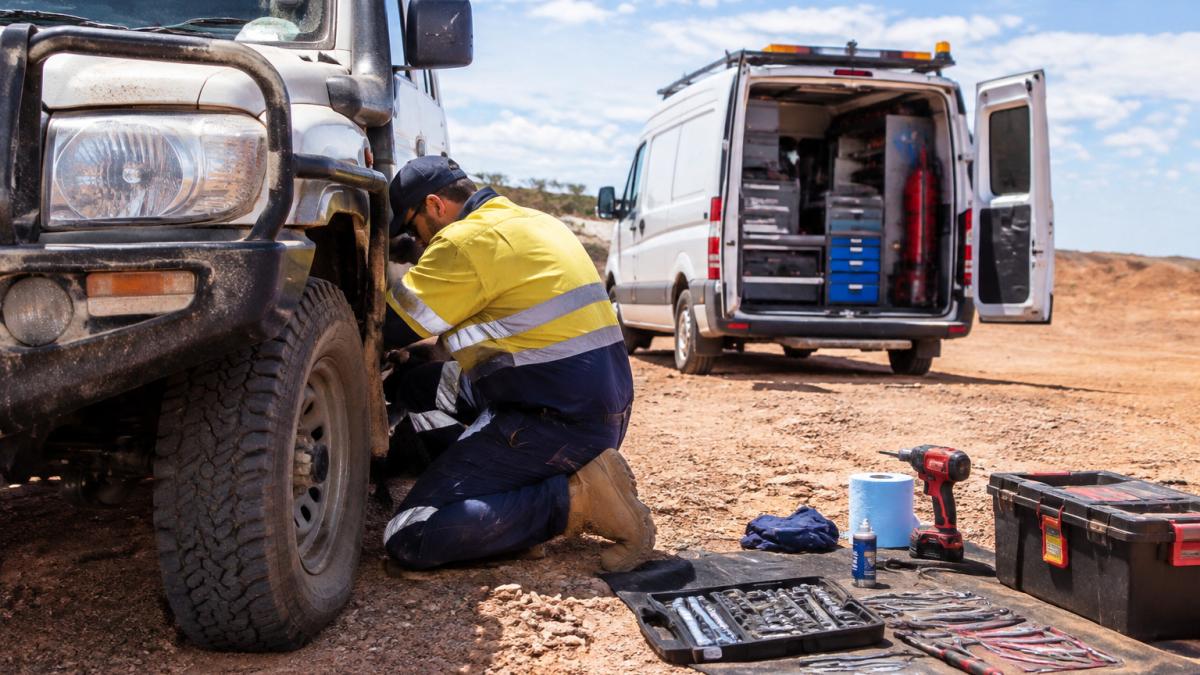
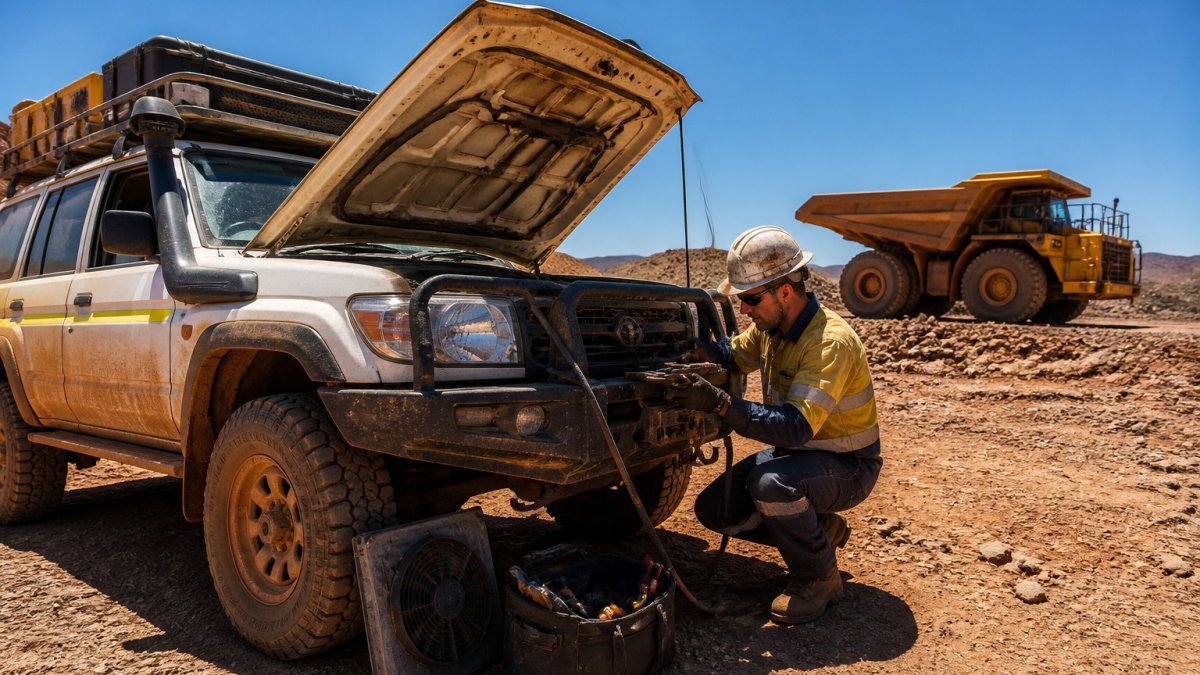
Every hour a light vehicle sits idle at a Goldfields mine site costs more than the repair bill. Fleet managers and maintenance supervisors across the region often describe a familiar pattern: a minor fault is ignored, it becomes a breakdown, and the vehicle is off the road for days while parts and technicians are arranged. Reducing mining vehicle downtime comes down to measuring where time is lost, then putting a plan in place before the next failure.
This guide walks through six practical steps. Each one is something a site team can start this month.
Why Mining Vehicle Downtime Costs More Than the Repair
The real cost of downtime is rarely the parts and labour on the invoice. It is the crew standing idle, the work that gets pushed back, and the fleet shortfall that forces overtime or hire-ins.
- Lost production time for the crew and the equipment waiting on that vehicle
- Emergency call-out rates, which are usually higher than planned work
- Expedited freight on parts that should have been on the shelf
- Knock-on delays to other vehicles that share the same workshop capacity
A common mistake is to judge a repair only by its direct cost. Once the lost hours are counted, a cheap, fast fix often beats a cheap, slow one.
Step 1: Measure Your Current Downtime and Find the Root Causes
You cannot reduce what you do not measure. Start by logging every time a light vehicle is unavailable, and record why.
Track these numbers for each vehicle:
- Hours unavailable per week
- Number of unplanned breakdowns
- Time from breakdown to vehicle back in service
- Cause of each event (for example: cooling fault, electrical, tyre, air conditioning)
Then look for patterns:
- Do the same vehicles fail repeatedly?
- Do failures cluster after a particular service interval?
- Are certain causes linked to dust, heat, or rough haul roads?
Watch out: a log that records only the repair, and not the cause, will hide the real problem. Write down the root cause every time.
Step 2: Build a Mining Vehicle Maintenance Schedule Around Operating Conditions
A standard service interval written for a road vehicle will not suit a light vehicle working in 45-degree heat and fine dust. Build your mining vehicle maintenance schedule around the conditions the vehicle actually works in.
- Shorten filter and oil change intervals where dust is heavy
- Check cooling systems and belts more often during summer months
- Schedule battery and electrical checks before the hottest part of the year
- Plan planned maintenance during shift changes or low-production windows
Keep the schedule visible in the workshop and on the site board, so supervisors can plan vehicles out of service without surprises.
Step 3: Run Standardised Operator Inspections and Early Fault Reporting
Operators spend more time with a vehicle than anyone else. A short, standard pre-start inspection catches many faults while they are still small.
- Use one inspection checklist for each vehicle class, not a generic form
- Include fluid levels, tyres, lights, brakes, and warning indicators
- Make reporting a fault quick and free of blame, so operators report early
- Set a clear rule: any defect that affects safety or operation gets reported before the vehicle leaves the yard
A simple reporting habit often does more for downtime than any new piece of equipment.
Step 4: Set Up a Mining Fleet Maintenance Checklist for Each Vehicle Class
Different light vehicles fail in different ways. A single fleet-wide checklist tends to miss the items that matter most for each type.
Build a separate checklist for each vehicle class, covering:
- The components that fail most often on that class
- Service items with the longest lead times for parts
- Air conditioning and cabin systems, which affect operator comfort and safety in extreme heat
- Fire suppression and safety fit-outs, which must be checked to site standards
Review each checklist every six months. Update it when your downtime log shows a new failure pattern.
Step 5: Plan Breakdown Response Before the Breakdown Happens
When a vehicle fails at a remote site, the time spent waiting for help is often longer than the repair itself. Plan the response in advance.
- Agree who to call, and what information to give, before a breakdown occurs
- Confirm how quickly a mobile technician can reach each site
- Keep a list of the most common repair jobs and the parts needed for them
- Agree a target response time and track whether it is being met
For more on arranging on-site response, see On-Site Vehicle Breakdown Response in Kalgoorlie: A Step-by-Step Guide.
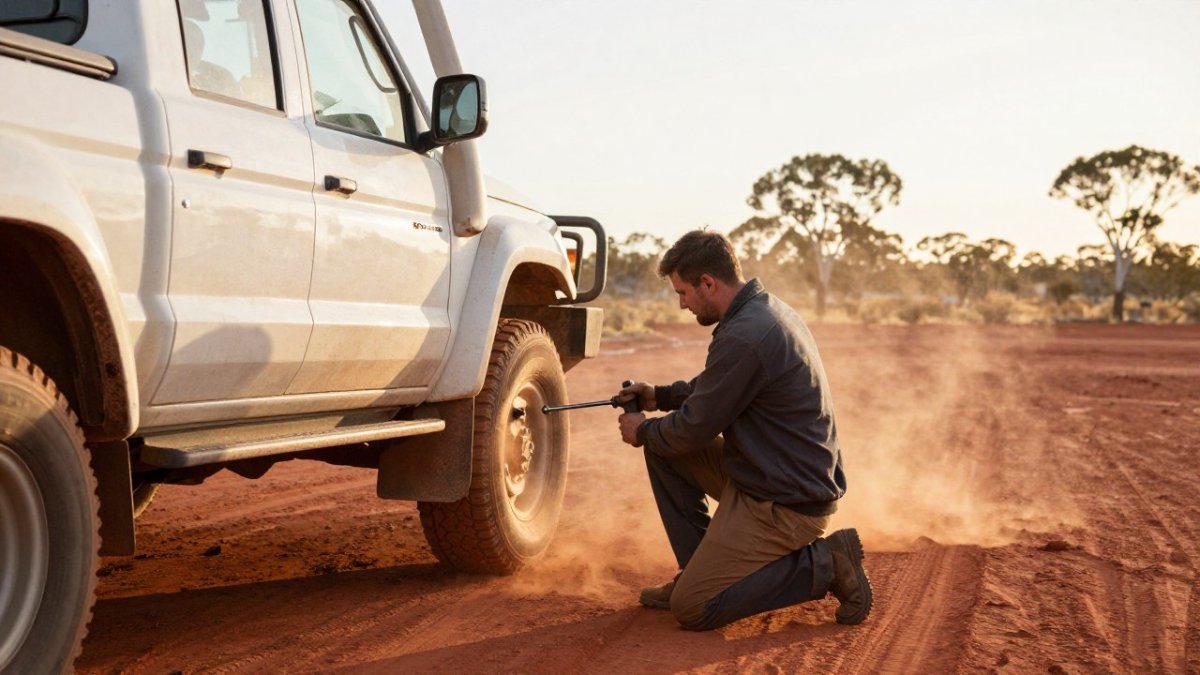
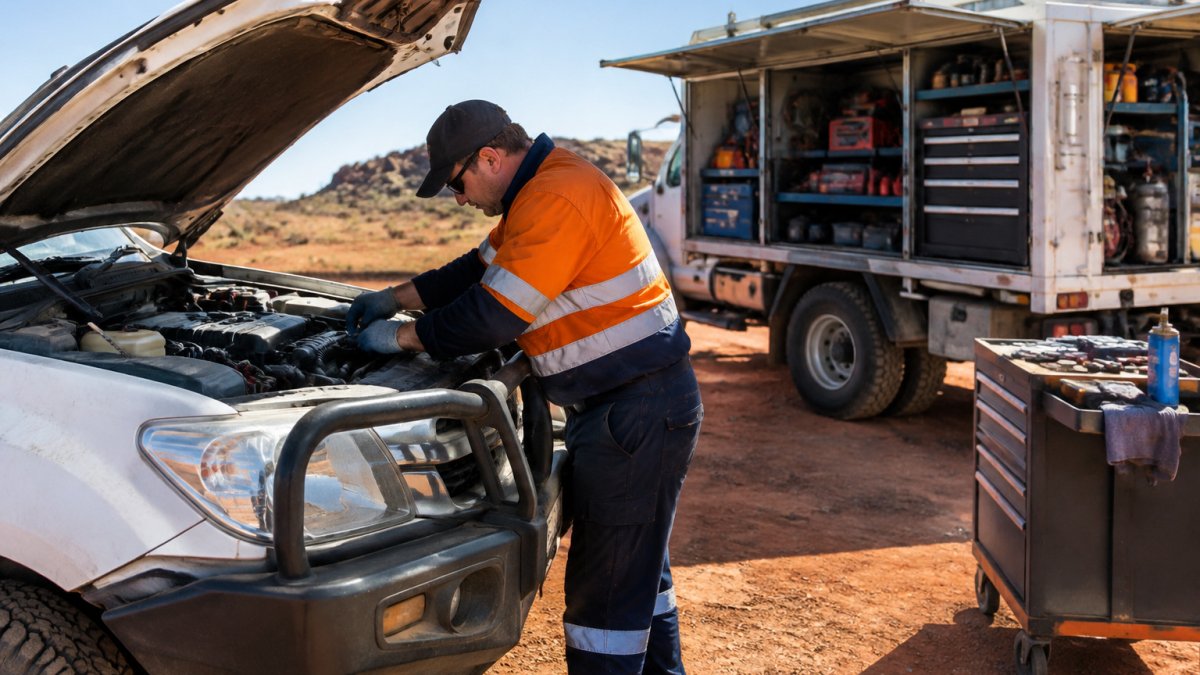
A mobile mechanic working at the site can avoid the time needed to tow a vehicle to a fixed workshop.
Step 6: Keep Spare Parts and Mobile Support Ready for Remote Sites
Parts availability is one of the biggest drivers of downtime at remote sites. A repair that takes an hour can become a three-day wait if the part has to be shipped in.
- Hold stock for the parts that fail most often on your fleet
- Review stock levels against your downtime log each quarter
- Agree how mobile support will be provided when a vehicle cannot be moved
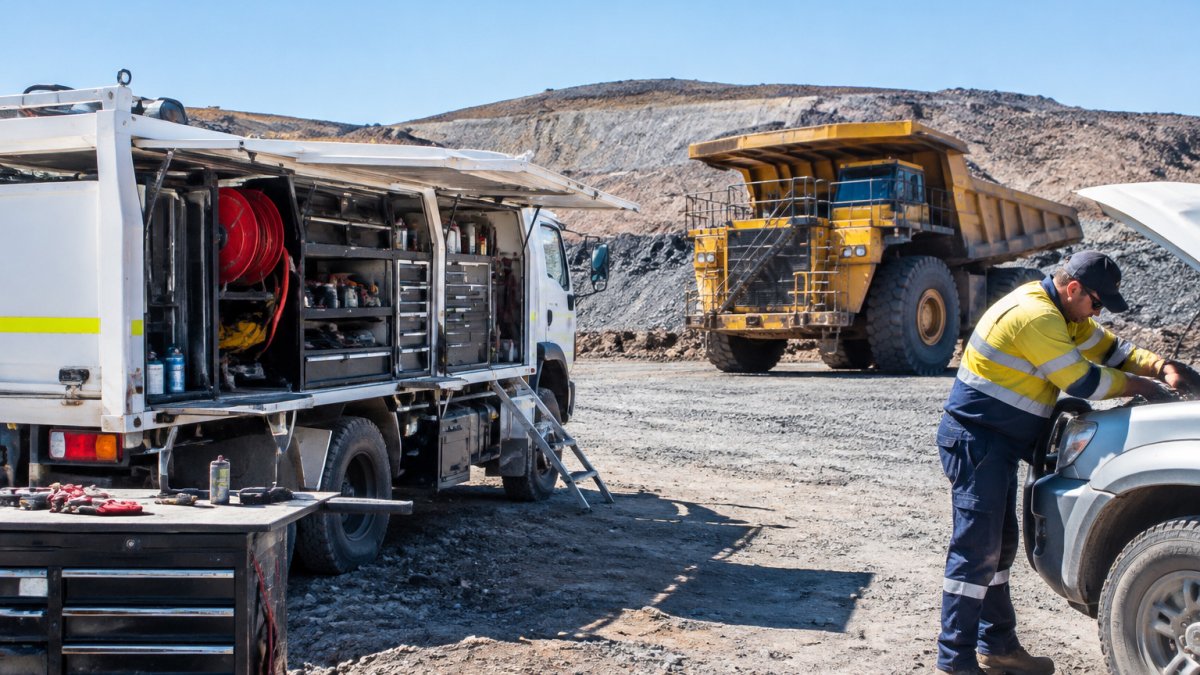
For sites where a fixed workshop is not practical, specialised light vehicle mining services can bring the workshop to the vehicle. Compare the options in Mobile Workshop vs Fixed Site Maintenance before deciding how to support your remote operations.
Booking Your First Downtime Review With T U Mechanical Contracting
If you want an outside view of where your fleet is losing time, start with a downtime review. T U Mechanical Contracting can look at your current logs, your maintenance schedule, and your breakdown response, then suggest changes to consider. Pricing depends on the size of your fleet and the sites covered, so the best next step is to get in touch for a quote.
Frequently Asked Questions
What causes unplanned downtime in mining vehicles?
Unplanned downtime usually comes from a small number of recurring causes: missed or late service intervals, faults that operators noticed but did not report, worn components that were not replaced on schedule, overheating or dust ingress in harsh desert conditions, and delays waiting for spare parts or a technician. Tracking the reason for every stoppage shows which of these drives most of your lost hours. Once you know, you can target the preventive work that removes that cause rather than replacing parts on guesswork.
How often should mining vehicles be serviced?
Service intervals should follow the manufacturer's hour or kilometre schedule, then be adjusted for your conditions. Vehicles running long hours in high dust, heat or steep haul routes often need shorter intervals for filters, coolant, air-conditioning checks and brake inspections than the standard schedule suggests. Review your breakdown data each quarter and shorten intervals for any component that is failing between services.
How can operators identify vehicle faults before a breakdown?
Give operators a short, standardised pre-start and end-of-shift inspection covering fluids, tyres, lights, brakes, air-conditioning performance, warning lights and any unusual noise or heat. Require every defect to be logged the same shift, with a photo where possible. Early reports of small faults, such as a slow air-conditioning compressor or a weeping hose, are far cheaper to fix than the failure they lead to.
How can mobile mechanical support help reduce mining vehicle downtime?
A mobile workshop that attends site brings maintenance to the vehicle rather than sending the vehicle to a workshop hours away. This cuts transport time, lets routine services happen during shift gaps, and gives faster breakdown response on remote Goldfields sites. Pairing mechanical, air-conditioning and fire suppression work with one provider also reduces the handover delays that come with managing several contractors.