 ultimate-guide
Goldfields Mining Fleet Maintenance: Best Practices Guide
Last Updated: October 23, 2026
Quick Summary
Mining fleet maintenance in the Goldfields requires a systematic approach combining preventive maintenance, rigorous inspection protocols and rapid breakdown response to prevent catastrophic downtime in harsh desert conditions. A structured mining fleet maintenance program built around daily pre-start inspections, scheduled service intervals and condition monitoring keeps operations moving safely and reliably.
- Daily pre-start inspections take 10-15 minutes and catch issues before they become operational problems using a standardized checklist.
- Goldfields vehicles typically need more frequent servicing than standard intervals due to heat, dust and rough terrain accelerating wear.
- Condition monitoring combines fluid analysis, vibration and temperature monitoring, telematics data and fault codes to predict component failures before breakdown.
- Annual servicing includes engine oil and filter, coolant flush, brake fluid replacement, suspension inspection and air conditioning recertification.
- A remote-site breakdown means lost production hours, crew delays and safety exposure, making preventive maintenance an investment in operational reliability.
Table of Contents
- Why Mining Fleet Maintenance Matters in Harsh Operating Conditions
- Mining Vehicle Preventive Maintenance: Building a Reliable Foundation
- Mining Fleet Maintenance Checklist: What Every Site Supervisor Needs
- Mining Fleet Maintenance Schedule: Planning for Maximum Uptime
- Mining Vehicle Breakdown Response: Minimising Operational Delays
- Condition Monitoring and Predictive Maintenance
- Australian Mining Compliance and Safety Requirements
- Reducing Unplanned Downtime Through Data and Root-Cause Analysis
- Frequently Asked Questions
Why Mining Fleet Maintenance Matters in Harsh Operating Conditions
Mining fleet maintenance isn't optional in the Goldfields, it's the difference between smooth operations and catastrophic downtime.
At T U Mechanical Contracting, we understand the value of systematic preventive maintenance in cutting unplanned downtime and improving productivity.
A remote-site breakdown means lost production hours, crew delays and safety exposure.
Mining Vehicle Preventive Maintenance: Building a Reliable Foundation
Preventive maintenance is the foundation of fleet reliability: schedule service intervals by operating hours, calendar time or condition data rather than waiting for components to fail.
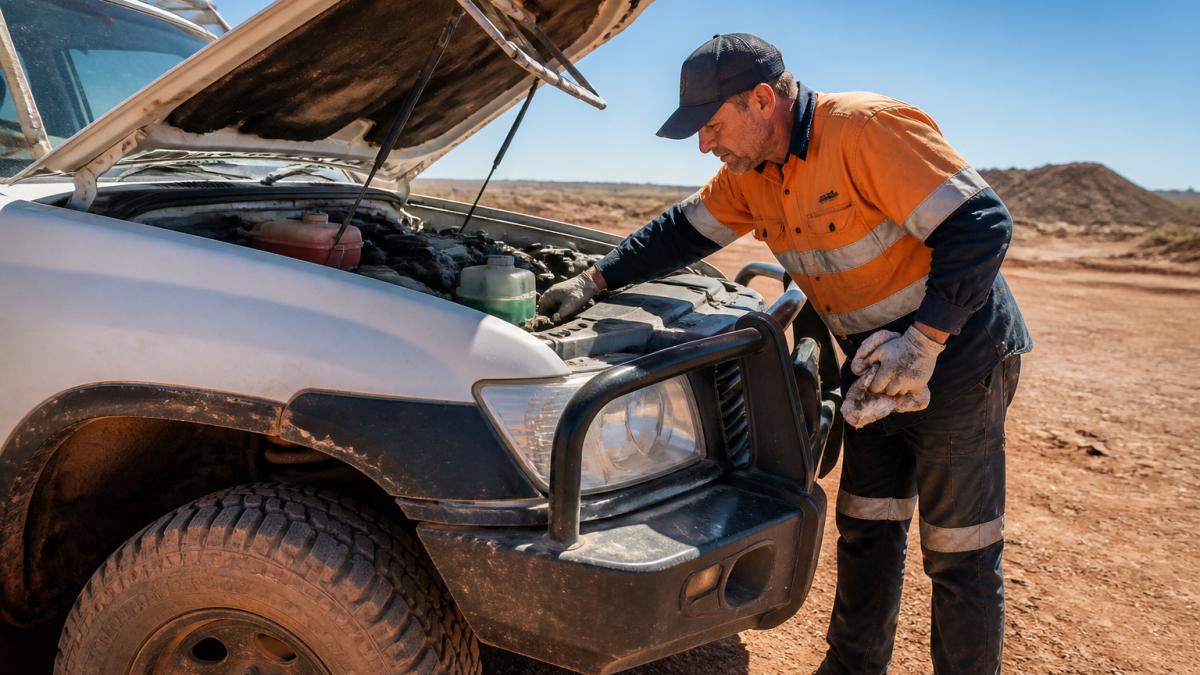
Pre-start inspection protocols
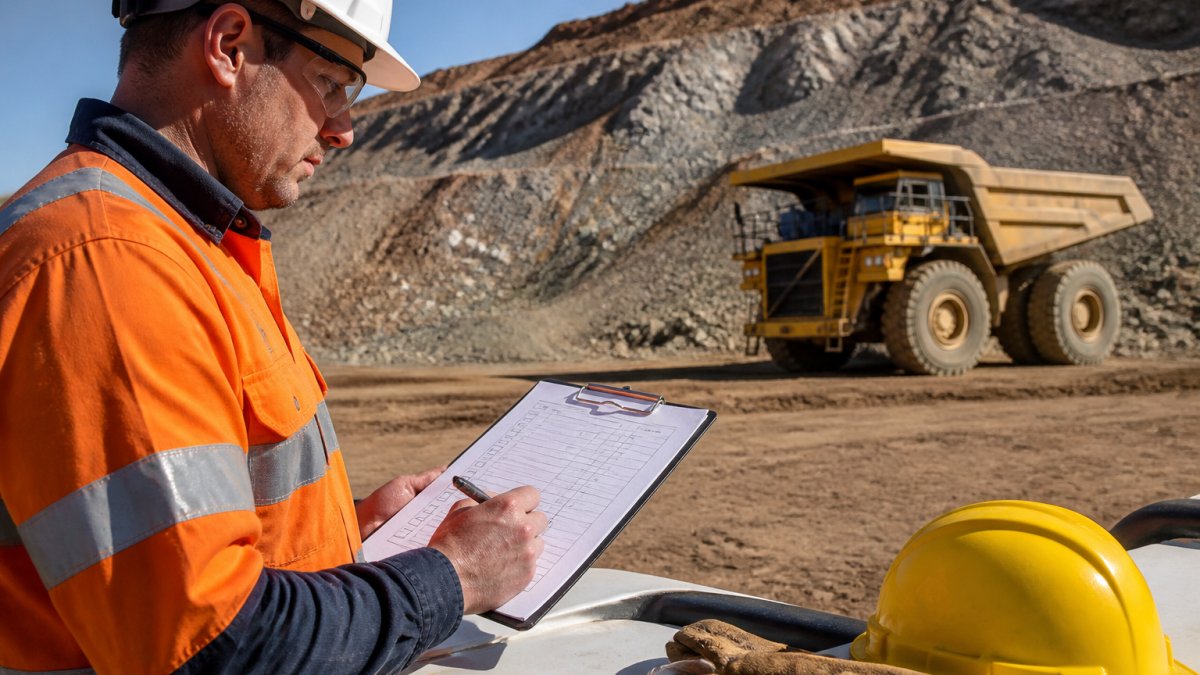
Every vehicle should undergo a pre-start inspection before entering service. This daily 10-15 minute ritual catches issues before they become operational problems.
Document every pre-start inspection to support compliance reporting and spot patterns, if three vehicles flag the same issue in a week, you've caught a systemic problem before it cascades.
Scheduled service intervals
Scheduled maintenance follows manufacturer recommendations adjusted for harsh conditions, Goldfields vehicles typically need more frequent servicing than standard intervals suggest.
Air conditioning needs more frequent servicing in extreme heat, brake fluid and coolant need periodic replacement, and suspension benefits from regular inspection and lubrication.
Build your mining fleet maintenance schedule around operating hours: a vehicle running 60 hours per week reaches service milestones faster than one running 20.
Mining Fleet Maintenance Checklist: What Every Site Supervisor Needs
A comprehensive checklist becomes your standard operating procedure, the reference supervisors and technicians follow without exception.
Engine and fluid systems
Check oil level and condition (colour, clarity, contamination), inspect the air filter for dust (Goldfields dust clogs filters faster than anywhere else), verify coolant level and concentration, test battery voltage and terminals, and inspect hoses and belts for cracks.
Beyond the engine, power steering, brake and transmission fluids need regular inspection and top-ups, replaced on schedule rather than left to degrade.
Brake, suspension, and tyre inspection
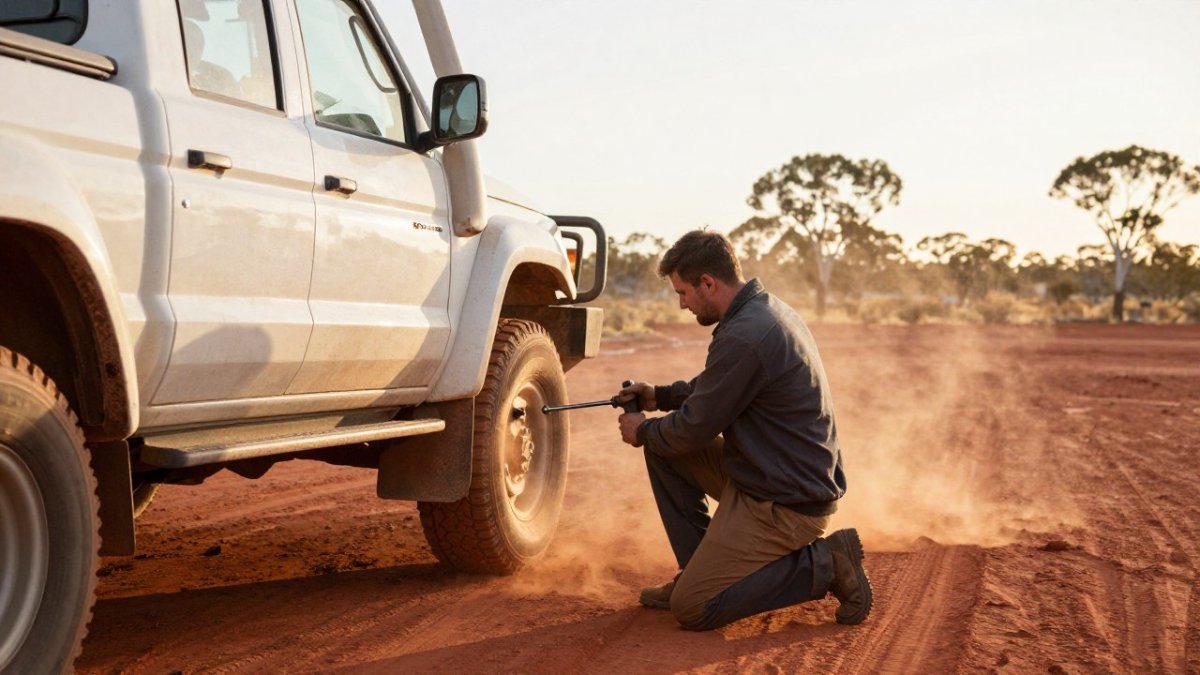
Suspension takes a beating on rough terrain: inspect shock absorbers for leaks or damage, check bushings for wear, look for uneven tyre wear, and test steering response.
Tyres are your only contact with the ground: check tread depth and wear patterns, inspect for cuts, bulges or punctures, verify pressure monthly and rotate regularly.
Air conditioning and fire suppression compliance
Air conditioning isn't a luxury in the Goldfields, it's essential for crew safety and vehicle reliability. Check refrigerant charge and system pressure, inspect compressor operation, verify condenser and evaporator function, and service annually or more often.
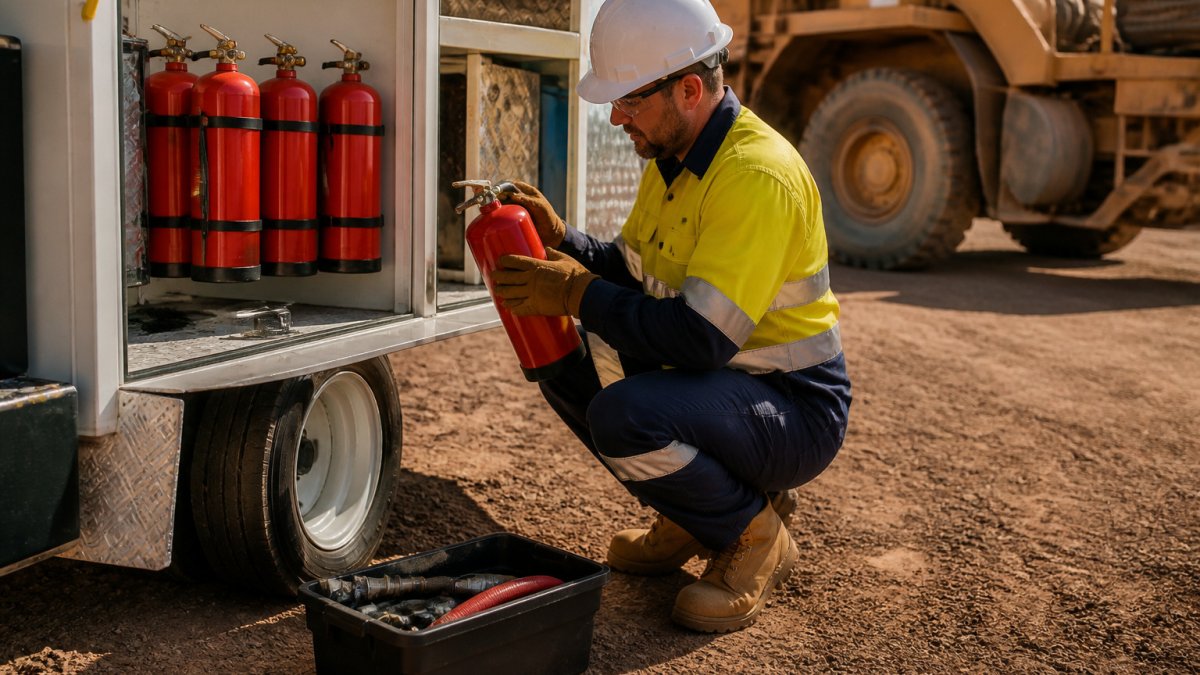
Fire suppression systems require certified inspection and maintenance: schedule annual recertification, verify all components are present and functional, and document compliance for audit purposes.
Mining Fleet Maintenance Schedule: Planning for Maximum Uptime
A realistic maintenance schedule balances thoroughness with operational continuity. You can't take every vehicle offline simultaneously, so stagger major services across the fleet.
Daily and weekly tasks
Daily pre-start inspections happen before vehicles enter service; weekly tasks include visual fluid checks, tyre pressure verification and light function testing.
Assign daily and weekly tasks to site supervisors or experienced drivers, they need consistency, not specialist technicians, and track completion in your work order system.
Monthly and quarterly inspections
Monthly inspections go deeper: all fluid levels and conditions, brake components, air conditioning performance, suspension and steering, and any leaks, corrosion or damage.
Quarterly inspections include filter changes (engine air, cabin air, fuel if applicable), fluid top-ups and detailed component examination, where you catch wear before it becomes failure.
Annual compliance and major servicing
Annual servicing covers engine oil and filter, coolant flush, brake fluid replacement, transmission fluid service if applicable, suspension inspection and lubrication, air conditioning recertification, and fire suppression inspection and recertification.
Schedule annual servicing during lower-activity periods when you can afford vehicles offline, and coordinate with your maintenance provider well in advance, major servicing takes time.
Mining Vehicle Breakdown Response: Minimising Operational Delays
Despite best preventive efforts, breakdowns happen. Your response protocol determines whether a breakdown becomes a minor delay or a major operational disruption.
Rapid response protocols for remote sites
Establish clear communication channels for breakdown reporting. A mobile service provider with rapid response capability can significantly reduce wait times and help get operations back on track.
When a breakdown occurs, document it immediately: vehicle, location, symptoms and time. This helps your technician diagnose quickly.
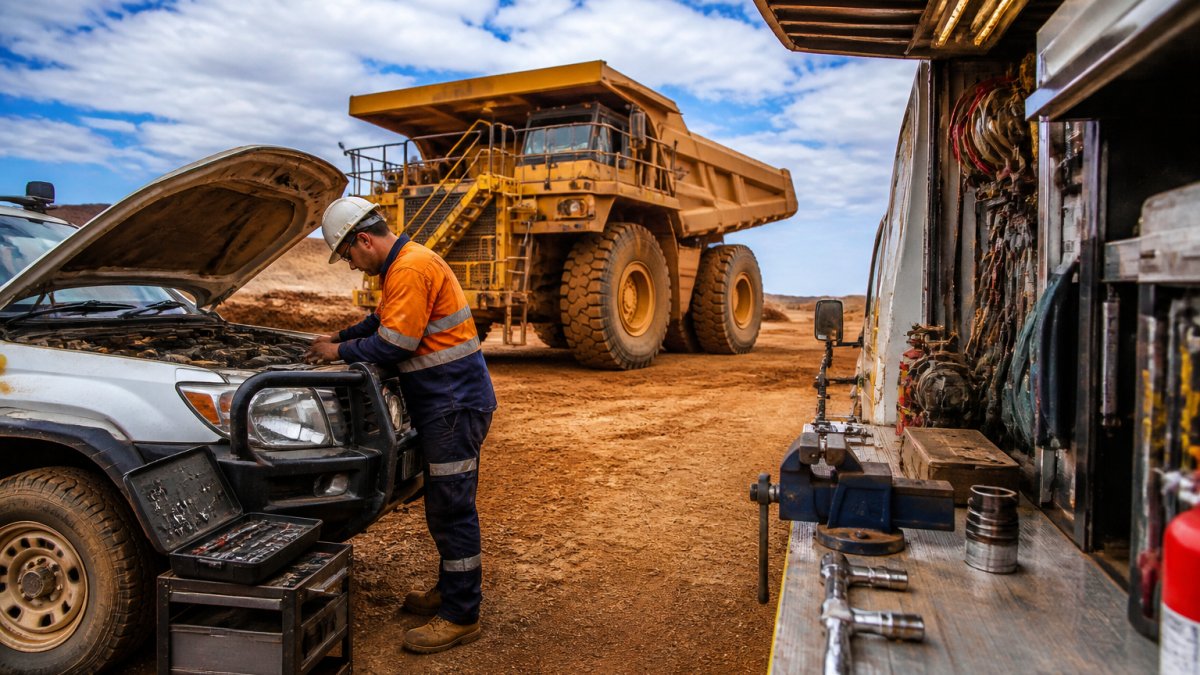
For critical breakdowns at remote sites, mobile technicians eliminate transport delays.
Critical spares and logistics planning
Maintain a stock of critical spare parts at your mine site: engine oil, filters, coolant, brake pads, fuses, belts and hoses cover most field repairs.
Plan for seasonal peaks. During extreme heat, air conditioning failures spike. During dust storms, filter changes become urgent. Stock accordingly and schedule preventive service before peak periods hit.
Condition Monitoring and Predictive Maintenance
Scheduled servicing keeps a fleet predictable, but condition monitoring turns maintenance from calendar-driven guesswork into a data-driven program, in goldfields operations, a single vehicle failure can idle a crew for hours.
Condition monitoring is a layered program, not one tool. Most mature mining fleets combine four data streams:
- Fluid analysis (oil and coolant). Sampling engine oil, transmission fluid, hydraulic oil and coolant at fixed intervals (commonly every 250-500 operating hours, adjusted for dust and heat) reveals wear metals, contamination, viscosity breakdown and coolant chemistry. A rising iron or copper trend is often the earliest signal of component wear, well before a fault code appears.
- Vibration and temperature monitoring. Rotating components, alternators, water pumps, compressors, driveline components, develop characteristic vibration signatures as bearings degrade. Infrared checks on hubs, brakes and electrical connections catch overheating before failure. Both are inexpensive to add to a routine service visit.
- Telematics and onboard diagnostics. Modern mining light vehicles and support equipment stream engine hours, idle time, fault codes, coolant temperature, oil pressure and fuel consumption. The value is the trend line, not the dashboard: a vehicle running 8-10°C hotter than its stablemates on the same haul cycle is telling you something.
Turning alerts into planned work
The failure mode most sites fall into is collecting data but never acting on it. Condition monitoring only pays off with a defined workflow:
- Set thresholds, not opinions. Define what 'normal' looks like for each equipment class, baseline oil-analysis values, acceptable temperature ranges, expected fault-code frequency, and document it so any technician interprets results consistently.
- Triage alerts by criticality. A coolant temperature drift on a crew-carrying light vehicle outranks a minor vibration on a support trailer. Rank alerts by safety impact, production impact and remaining useful life.
- Convert alerts into scheduled work orders. When a trend crosses a threshold, raise a work order with a planned window, not an emergency call-out, so the repair lands in scheduled downtime before it becomes a breakdown.
- Close the loop with root-cause analysis. Review every catch: was the threshold right, was the response timely, and what does the trend say about the operating environment? Feed that back into the program.
What predictive maintenance actually changes
Predictive maintenance means replacing components when the data says wear is approaching a critical level, not on a whim.
The output of a mature program is a maintenance plan that is partly calendar-based, partly usage-based and partly condition-based, with clear rules for which trigger applies to which component.
Australian Mining Compliance and Safety Requirements
Fleet maintenance in Australian mining is part of the site's safety management system and the broader work health and safety (WHS) framework. Getting this wrong is not just a compliance risk but an operational one, because maintenance failures on mobile plant are a recognised contributor to serious incidents on mine sites.
Maintenance programs must satisfy two regulatory layers simultaneously:
- Work health and safety law. Each state and territory has its own WHS Act and Regulations, supported by codes of practice and, for mining, mining safety and health legislation and guidance. The common thread is a general duty to ensure plant and equipment are safe, maintained in safe condition, and inspected and tested as required. Maintenance records are the evidence this duty has been discharged.
- Site-level safety systems. Mine sites layer their own standards on top, isolation and lock-out/tag-out procedures, permit-to-work systems, vehicle interaction and traffic management rules, fitness-for-work requirements, and site induction. A contractor or technician who does not understand these cannot legally or safely work on site, regardless of technical skill.
What this means for your maintenance program
A compliant program is built around documented, repeatable processes rather than ad hoc repairs:
- Plant registration and inspection obligations. Certain items of plant, pressure equipment, lifts, cranes, and registered mobile plant, carry specific inspection, testing and registration obligations. Know which of your equipment falls into these categories and schedule the required inspections ahead of time.
- Isolation and energy control. Every maintenance task involving stored energy, hydraulic, electrical or pressurised systems, must follow the site's isolation procedure. Build isolation steps into the work order, not into a technician's memory.
- Fire suppression and heat management. Fire suppression systems on mobile plant require certified inspection and maintenance, and air conditioning is a heat-stress control, not a comfort feature. Treat both as safety-critical systems with their own service schedules and records.
Documentation that survives an audit
Maintenance records should let an auditor, regulator or incident investigator reconstruct what was done, by whom, when and to what standard. At minimum, capture:
- Equipment identifier and location
- Date and operating hours at service
- Work performed, parts used and defects found
The contractor dimension
Using an external maintenance provider does not transfer your WHS duties. As the mine operator, you retain responsibility for ensuring contractors are competent, inducted and working to site standards. A good provider arrives with its own safety management documentation, isolation procedures and competency records, and integrates with your permit and induction systems rather than working around them.
Reducing Unplanned Downtime Through Data and Root-Cause Analysis
Track every breakdown and maintenance event. Over time, patterns emerge: repeat component failures, higher-failure vehicles and seasonal trends.
Analyse this data to identify root causes.
Document lessons learned and share them across your fleet.
| Task | Frequency | Owner | Key Outcome |
|---|---|---|---|
| Pre-start inspection | Daily | Site supervisor/driver | Catches issues before operation |
| Fluid level check | Weekly | Site supervisor | Maintains system integrity |
| Monthly inspection | Monthly | Technician | Identifies developing wear |
| Quarterly service | Quarterly | Certified technician | Replaces filters, fluids, worn items |
| Annual major service | Annually | Certified technician | Comprehensive system renewal |
| Fire suppression recertification | Annually | Certified technician | Compliance and safety assurance |
Mining fleet maintenance in the Goldfields demands a systematic approach built for harsh conditions.
T U Mechanical Contracting brings all-in-one expertise directly to your site. With over a decade of mining industry experience and ARC certified trader status (AU069672), we understand what operational reliability looks like on actual mine sites. Contact us to discuss how a dedicated mobile service partner can reduce your downtime and improve your fleet compliance.
Frequently Asked Questions
What should a mining vehicle pre-start inspection include?
A pre-start inspection should check engine oil and coolant levels, brake fluid, tyre pressure and tread depth, battery condition, lights and wipers, and any visible leaks or damage. In harsh goldfields conditions, also inspect air filters for dust accumulation and ensure air conditioning systems are functioning. This 10-minute daily check prevents breakdowns and ensures driver safety before operations begin.
How often should mining vehicles be serviced?
Mining fleet maintenance schedule frequency depends on operating hours and conditions. Harsh desert conditions, dust, heat, and corrugated roads, accelerate wear, so more frequent inspections are essential. Consult your vehicle manufacturer's guidelines and adjust intervals based on actual usage data.
What is the difference between preventive and predictive maintenance?
Preventive maintenance follows fixed schedules: regular servicing, filter changes, and inspections at set intervals. Predictive maintenance uses condition monitoring, tracking fluid analysis, vibration data, and component wear, to identify problems before failure occurs. For mining fleets, combining both approaches works best: preventive maintenance keeps vehicles roadworthy, while predictive methods catch emerging faults early, reducing unexpected breakdowns and extending equipment life.
How can mining operators reduce fleet downtime?
Reduce downtime by implementing a structured mining fleet maintenance schedule, maintaining accurate work order records, stocking critical spares on site, and establishing rapid breakdown response protocols. Condition monitoring helps predict failures before they occur. Training technicians on common failure modes and root-cause analysis accelerates repairs. Mobile on-site maintenance services eliminate travel delays, keeping vehicles operational and crews productive.
How should mining fleet maintenance records be managed?
Maintain detailed records for every service: date, technician, work completed, parts replaced, and compliance certifications. Digital fleet management systems track maintenance history, schedule upcoming services, and flag overdue inspections. Records demonstrate regulatory compliance, support warranty claims, and provide data for predictive maintenance analysis. Organised documentation also assists technicians in diagnosing recurring issues and identifying failure trends across your fleet.
What maintenance checks are important for light vehicles on mine sites?
Critical checks include engine condition, brake system integrity, suspension and steering components, tyre wear and pressure, fluid levels and quality, air conditioning function, and fire suppression system certification. In goldfields operations, pay special attention to dust ingestion in air filters, heat-related coolant loss, and corrosion from salt and mineral exposure. Air conditioning reliability is essential for crew safety in extreme heat, and fire suppression compliance is a non-negotiable safety requirement.