 listicle
7 Certified Mine Site Mechanical Contractors Compared
Last Updated: November 2, 2026
Quick Summary
Mine site mechanical contractors are service providers whose technicians, processes and compliance records have been independently verified against mining operations requirements. Certification gives a site a documented starting point for due diligence, but it does not guarantee quality on its own, so buyers should also check the evidence behind the credentials.
- Certification does not guarantee quality on its own, but it gives a documented starting point for due diligence.
- Ask contractors for evidence rather than verbal assurances, including licences, fire suppression competency records and insurance certificates.
- Confirm ARC refrigerant handling licences on the ARC register rather than accepting a photocopy.
- Put vehicle classes, response times by site and the rate basis into a written service schedule before mobilisation.
- Ask for the full rate structure, including remote and after-hours loadings, before comparing quotes.
Table of Contents
- Comparison Table: Certified Mine Site Mechanical Contractors at a Glance
- The 7 Mine Site Mechanical Contractors Worth Shortlisting
- Mine Site Contractor Prequalification Checklist
- Mining Contractor Safety Requirements You Should Verify
- Mobile Mechanical Services for Mining: Scope, Response Times and Coverage
- Keeping Your Mining Fleet Maintenance on Schedule Before Your Next Engagement
- Frequently Asked Questions
Choosing a mechanical contractor for a mine site is a decision that shows up on the operating budget, the safety record and the breakdown log all at once. Buyers often place considerable weight on certification, and checking it can be difficult. This guide compares seven contractors that operate in or around the mining sector, and it gives you a practical way to shortlist them.
A certified mine site mechanical contractor is a service provider whose technicians, processes and compliance records have been independently verified against the requirements of mining operations. Certification does not guarantee quality on its own, but it gives a site a documented starting point for due diligence.
Mining is a demanding environment. Light vehicle fleets run long hours in dust, heat and remote terrain, and a single unscheduled stop can ripple through a roster. That is why the credentials of a maintenance partner matter as much as the price on the quote.
Mining sites are also governed by a strict safety regime. Fire suppression systems, air conditioning and mechanical work on mobile plant all carry compliance obligations. A contractor who cannot show current documentation for those tasks creates risk that lands on your site, not theirs.
Comparison Table: Certified Mine Site Mechanical Contractors at a Glance
The table below summarises the contractors covered in this guide. Pricing depends on scope, quantity and site location, so contact each provider for a current quote.
| Contractor | Core Focus | Mining Relevance | Pricing Published |
|---|---|---|---|
| T U Mechanical Contracting | Mobile mechanical, air conditioning, fire suppression | Light vehicle fleets in mining | No, contact for a quote |
| ISNetworld | Contractor prequalification and monitoring | Broad contractor compliance | No |
| Access Coins | Mechanical-contractor software | Job costing and field service | No |
| Field Materials | Mechanical-contractor software | Materials and vendor purchasing | No |
| Certified Mine Safety Professional (CMSP) | Mine-safety professional development | Individual safety credential | Course pricing not shown |
The table is a starting point, not a ranking. Each row answers a different buyer question, from "who does the physical work" to "how do we manage the paperwork."
The 7 Mine Site Mechanical Contractors Worth Shortlisting
We have assessed the options against the criteria mining buyers care about most: verified credentials, service coverage, response times and compliance documentation. Our own business appears first because it is the closest match for mobile light vehicle work in mining.
T U Mechanical Contracting: Mobile Mechanical, Air Conditioning and Fire Suppression
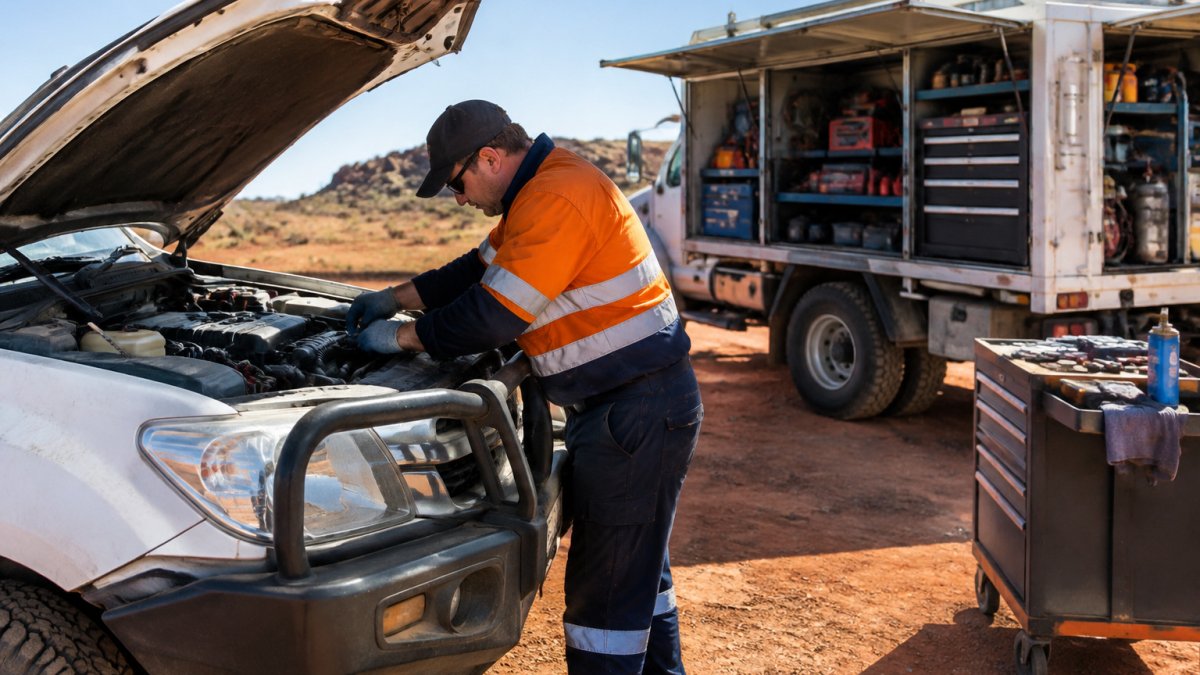
T U Mechanical Contracting brings mechanical servicing, air conditioning and fire suppression into one mobile workshop for light vehicle fleets. We hold an ARC certified trader licence (AU069672) and have more than a decade of mining-industry experience. One customer said: "T U Mechanical Contracting sorted out our fire suppression compliance checks across three utes at short notice. Arrived on time and fully inducted."
Best for: mining operations that want one provider for light vehicle mechanical, air conditioning and fire suppression work.
Skip if: you need heavy plant or fixed-plant maintenance, which falls outside our light vehicle scope.
ISNetworld: Prequalification and Ongoing Monitoring
It is a management platform rather than a workshop. Use it to verify the compliance standing of contractors you are considering, not as a substitute for their technical capability.
Best for: organisations that need a system to track contractor prequalification across many suppliers.
Skip if: you only need a single mobile mechanical provider on site.
Mine Site Contractor Prequalification Checklist
Before you shortlist any contractor, work through the checks below. Ask for evidence rather than verbal assurances.
- Current licence or trade certification for each technician
- Documented fire suppression competency and recertification records
- Site induction history and availability for inductions at your location
- Insurance certificates covering public liability and workers' compensation
- Safety management documentation and incident reporting process
- Response-time commitment for breakdowns at each of your sites
- Service-area coverage, including remote sites beyond the main town
- Compliance documentation supplied with every completed job
A contractor who cannot produce these documents quickly should move down your list.
Mining Contractor Safety Requirements You Should Verify
Safety requirements vary by site and by task, so confirm the specifics with your own safety team. For a deeper explanation, see fire suppression compliance standards. What does not vary is the framework a contractor should be able to evidence. In Australia, mine-site work sits under the model Work Health and Safety Act and Regulations as adopted in each jurisdiction, with mining-specific duties layered on by the state or territory mining regulator (for example, a principal mining hazard management plan under the mining safety legislation in the relevant state). A contractor who cannot map its systems to that framework is asking you to carry the risk.
Rather than accept a 'safety-first' claim, ask for the documents below and check each one against its source.
- Work health and safety management system. Ask for the current WHS management plan, not a certificate of attendance. Check that it names the hazards relevant to your site, diesel particulate, silica dust, heat, remote travel, lone working, and that it shows how those hazards are controlled.
- Trade and task competencies. For each technician, sight the trade qualification (for example Certificate III in Light Vehicle Mechanical Technology or an equivalent) and the specific competency for the task. Air conditioning work requires an ARC refrigerant handling licence; confirm the licence number and that it is current on the ARC register.
- Fire suppression competency. Ask for the technician's competency evidence, the system certification, the date of the last inspection and the name of the person who completed it. Keep all four with your asset register.
- High-risk work licences. If the scope involves forklifts, elevated work platforms, dogging or rigging, sight the high-risk work licence for each person and check the class matches the task.
- Electrical and auto-electrical boundaries. Confirm who holds the relevant electrical licence and where the mechanical scope stops. Auto-electrical work on mobile plant is a common grey area; get the boundary in writing.
- Insurance. Sight the certificate of currency for public liability and workers' compensation, and check the policy is current and the coverage limit is appropriate to the site.
- Site access and induction records. Ask for induction history and confirm the contractor can complete your site's induction before mobilisation, not after arrival.
- Incident and hazard reporting. Ask to see a sample incident report and the corrective-action close-out, so you can judge whether reporting is a live process or a folder of blank forms.
Watch out: a contractor that supplies a certificate but cannot produce the underlying management plan, licence register or incident records is showing you the cover of the book, not the book. Treat missing evidence as a finding, not a paperwork delay.
Verification is the part most buyers skip. The checks below take minutes and are worth doing before you shortlist.
- Confirm the ARC refrigerant handling licence on the ARC register rather than accepting a photocopy.
- Confirm high-risk work licences through the relevant state or territory regulator's licence check.
- Confirm the business name and ABN on the Australian Business Register.
- Ask each referee whether the contractor's documentation arrived before mobilisation and matched what was promised.
Safety requirements are site-specific, so the final list should be agreed with your own safety team. The principle to hold to is that every claim on a contractor's website should be traceable to a document you have seen and a register you have checked.
Mobile Mechanical Services for Mining: Scope, Response Times and Coverage
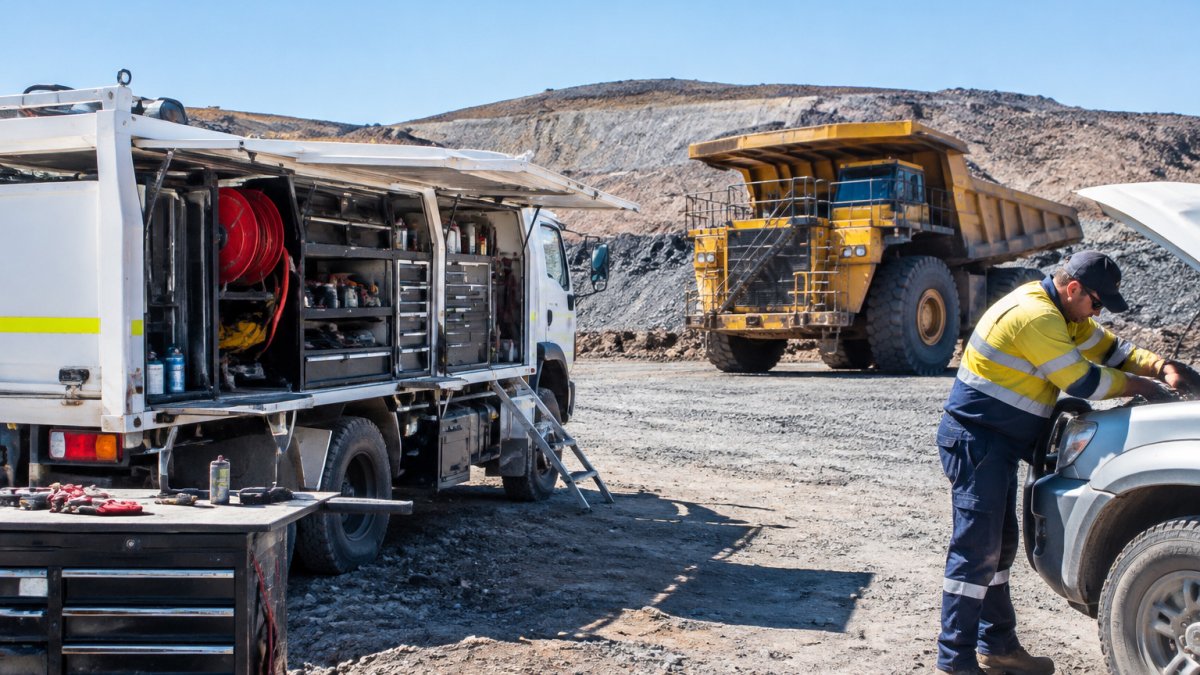
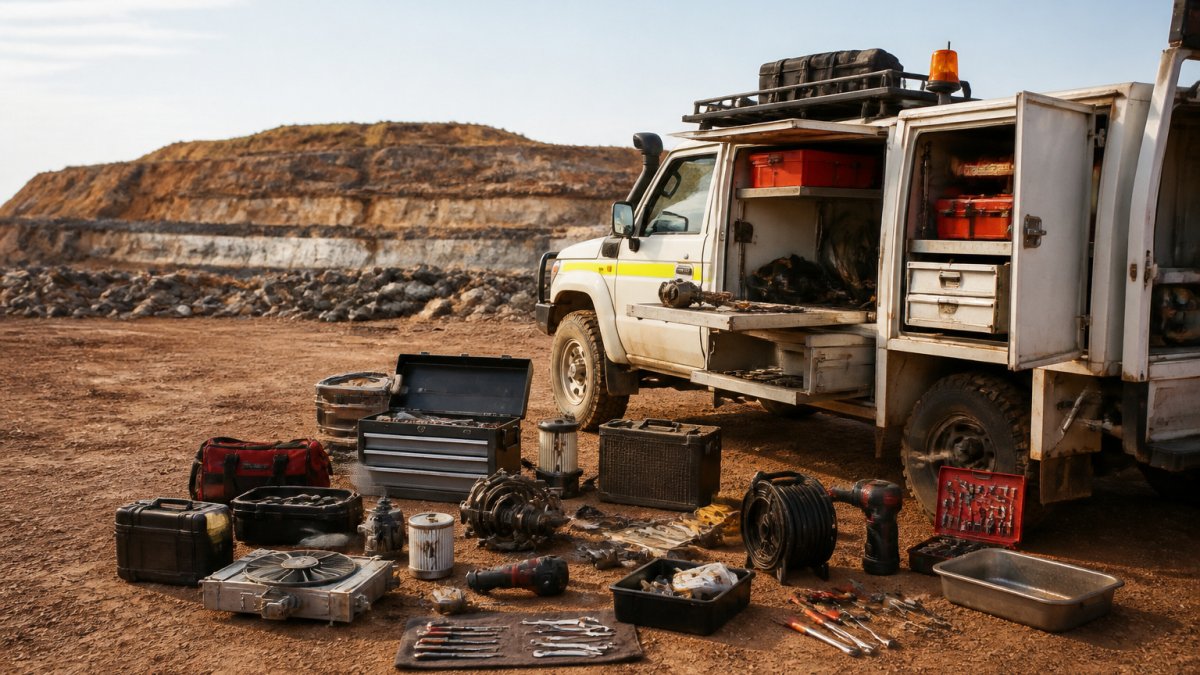
Mobile mechanical services bring the workshop to the vehicle. For fleets spread across several sites, that removes transit time and the coordination overhead of booking separate trades for mechanical, air conditioning and fire suppression work. The value only holds, though, if scope, response and coverage are written into the engagement rather than assumed.
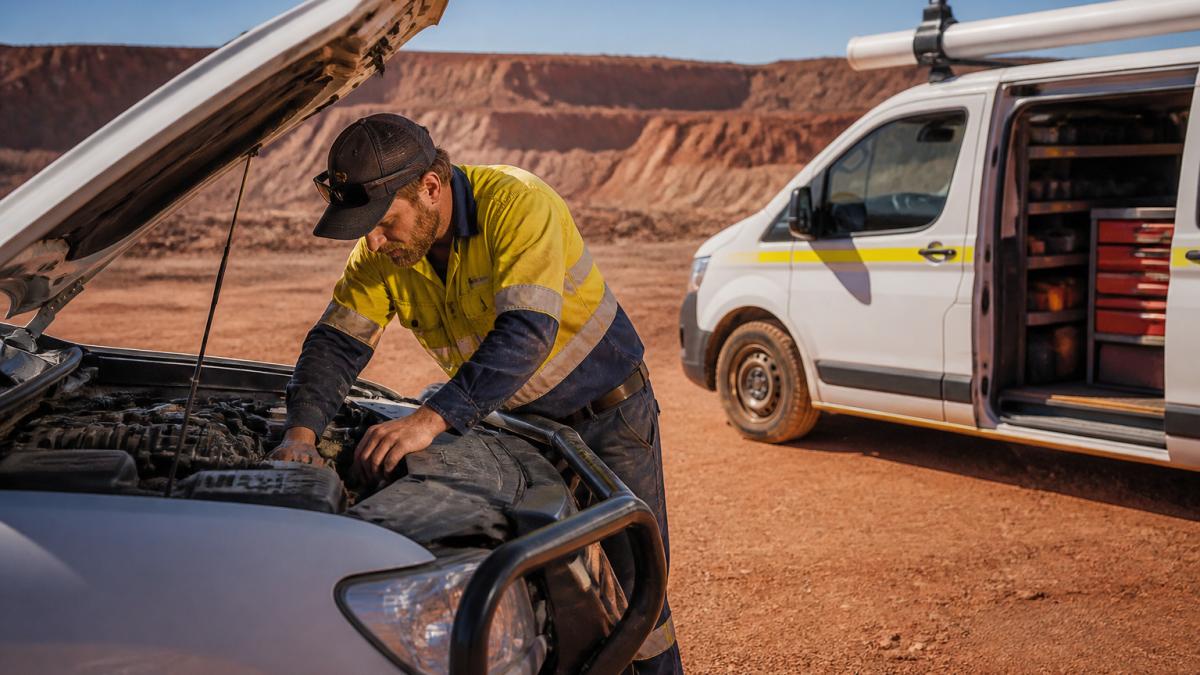
Scope. Put the vehicle classes and tasks in the schedule. Confirm whether the engagement covers light vehicles only or extends to heavy plant, whether air conditioning and fire suppression are included or quoted separately, and what is excluded (for example, tyres, auto-electrical fault finding or panel work).
Response times. Ask for response times by site, not a single regional figure. A workable structure separates three numbers: acknowledgement of the call, arrival on site, and completion of the repair.
Coverage and mobilisation. Coverage is more than a radius on a map. Our mine site compliance fit-outs and mobile support show what on-site compliance and mobile support cover.
Availability and crew size. Clarify the crew size you can expect for planned work versus breakdowns, and whether shutdown support is available as a separate engagement. A single-technician model suits light vehicle fleets; larger shutdowns need a different crew plan, and the contractor should be able to describe it.
Engagement models. Most mine-site mechanical work is quoted on one of three bases: an hourly rate plus call-out and travel, a fixed price per service or per project, or a scheduled maintenance agreement with agreed intervals. Ask which model applies, what triggers a variation, and how travel and accommodation are treated. None of these should be left to the invoice.
Watch out: a low hourly rate can hide travel, call-out and remote-site allowances that only appear on the first invoice. Ask for the full rate structure, including after-hours and remote loadings, before you compare quotes.
A short written service schedule, vehicle classes, tasks, response windows by site, crew size and rate basis, is the single most useful document you can agree before mobilisation. It gives both sides a shared reference when a breakdown lands at the worst possible time.
Keeping Your Mining Fleet Maintenance on Schedule Before Your Next Engagement
Planned maintenance is cheaper than breakdown maintenance, and it is easier to schedule around production. Before you engage any contractor, review your fleet's service intervals, the air conditioning and fire suppression certification dates, and any outstanding defect reports.
If you would like a conversation about light vehicle mechanical, air conditioning or fire suppression work at your sites, Contact Us to discuss your light vehicle mechanical, air conditioning and fire suppression requirements and request a quote.
Frequently Asked Questions
What qualifications should a mine site mechanical contractor have?
A mine site mechanical contractor should hold trade qualifications for the work being done, such as a mechanical fitter or auto electrical licence, along with a current ARC trade licence where air-conditioning refrigerant handling is involved. Ask for the licence numbers and check them against the issuing body's register. Site-specific inductions and the operator's own prequalification standards also apply, so confirm the contractor has completed these before mobilising.
How do you verify a mechanical contractor is ready to work on a mine site?
Request written evidence rather than relying on verbal assurances. Useful documents include trade licences, current insurance certificates, safety management documentation, induction records and examples of completed work at comparable sites. Cross-check these against the mine operator's prequalification requirements and confirm the contractor's technicians can produce their own credentials on request.
What should a mine site contractor prequalification checklist include?
A practical checklist covers business registration, insurance, trade licences, safety and health management systems, incident history, technician qualifications, equipment and workshop capability, fire suppression or refrigerant certifications where relevant, and references from comparable mining work. Add a review of response times, service coverage across the sites you operate, and how compliance paperwork is delivered after each job.
What should you ask before hiring a mobile mechanical contractor?
Ask how quickly the contractor can respond to a breakdown and whether that changes during peak periods or when multiple sites are active. Confirm what is carried in the mobile workshop, how compliance documents are issued, how pricing is structured, and whether one provider can cover mechanical, air-conditioning and fire suppression work. Pricing depends on scope, quantity and site location, so request a written quote for your specific fleet.